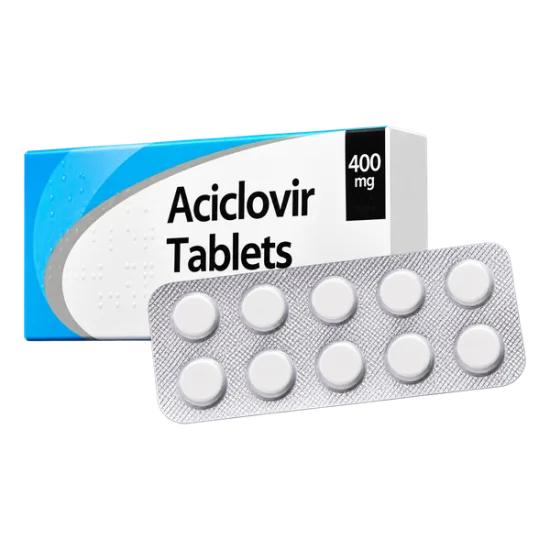
Aciclovir tablets reduced the spread of a cold sore when I started them at the tingling stage. The area still took several days to settle, and I had mild nausea after one dose, which improved when I took it with food.
4 Nov 2026
Aciclovir
Herpes simplex and varicella-zoster infections can cause cold sores, genital herpes, or shingles. Aciclovir tablets contain the antiviral nucleoside analogue aciclovir, which limits viral DNA…
Herpes simplex and varicella-zoster infections can cause cold sores, genital herpes, or shingles. Aciclovir tablets contain the antiviral nucleoside analogue aciclovir, which limits viral DNA replication and works best when started early in an outbreak.
Product information
Aciclovir is a synthetic nucleoside analogue used against herpes simplex virus and varicella-zoster virus. The tablets supplied on this page contain aciclovir. Tablet strengths and dosing may differ between users, so there is no single amount suitable for everyone. Aciclovir is converted inside infected cells into its active triphosphate form, where it interferes with viral DNA synthesis.
The drug is more active in infected cells because viral thymidine kinase begins the activation process. Cellular enzymes then complete the conversion. This gives aciclovir a degree of selectivity: it targets viral replication more strongly than normal, uninfected cells.
Inhibition of viral DNA synthesis
Active aciclovir triphosphate competes with natural nucleotides used to build viral DNA. Once incorporated into the growing viral DNA chain, it prevents further extension. The result is slowed or stopped replication of susceptible herpes viruses.[1]
Aciclovir does not remove herpes viruses from the body. The virus can remain dormant in nerve tissue and reactivate later. Treatment aims to shorten an outbreak.
The medicine works best before an outbreak becomes extensive. Tingling, burning, itching, or local sensitivity can occur during the prodromal phase, before blisters become obvious.
Ingredients
Aciclovir is available as oral tablets and, in some treatment settings, as other pharmaceutical forms such as topical preparations, oral liquids, or intravenous treatment. The product described here is the tablet form. Tablet strengths and dosing may differ between users, so there is no single amount suitable for everyone.
Therapeutic indications
Aciclovir is used for infections caused by herpes simplex virus type 1, herpes simplex virus type 2, and varicella-zoster virus. The clinical choice depends on the infection site, severity, immune status, kidney function, outbreak history, and prescribed strength.
| Infection | Typical presentation | Aciclovir role |
|---|---|---|
| Herpes simplex | Blisters, ulcers, burning, or painful grouped lesions | Limits viral replication during episodes |
| Cold sores | Tingling followed by blisters around the lips or face | Most useful when started early |
| Shingles | One-sided painful rash caused by varicella-zoster virus | Reduces viral activity when started promptly |
Genital herpes and cold sores
Genital herpes can cause painful blisters or ulcers around the genitals, anus, buttocks, or upper thighs. The first episode may be more extensive and can include painful urination, fever, swollen lymph nodes, or marked fatigue. Recurrent episodes are often shorter, although symptoms vary between individuals.
For cold sores, the first sign may be a small area of tingling or tightness on the lip. Starting treatment during this early stage can limit the development of lesions. Once a blister has crusted, antiviral treatment may still be prescribed, though the benefit can be smaller than with early initiation.
Aciclovir can reduce the duration and severity of an outbreak. It does not prevent every future recurrence, and it does not provide guaranteed protection against transmission. During active genital lesions or warning symptoms, sexual contact can transmit herpes even when a visible ulcer is small.
Varicella-zoster and shingles
Shingles develops when dormant varicella-zoster virus reactivates. Shingles often causes a one-sided rash.
Antiviral treatment for shingles should begin as soon as possible, ideally within 72 hours of rash onset. Treatment may still be considered after that window when new lesions continue to appear, pain is substantial, or the eyes, ears, face, or immune system are involved.
Eye pain, facial weakness, hearing changes, confusion, or a rash near the eye require urgent medical assessment. Shingles affecting the eye can threaten vision.

Directions for use
The number of tablets and frequency of administration depend on the infection being treated. A schedule for recurrent cold sores may differ from a schedule for genital herpes, shingles, or infection in a person with reduced immunity.
Administration and missed doses
- Take Aciclovir by mouth at the prescribed frequency.
- Swallow each tablet with water.
- Dosing differs between strengths and between users, so there is no single amount suitable for everyone.
- Continue for the prescribed duration, even if lesions begin to improve earlier.
- If a dose is missed, take it when remembered unless the next dose is due soon.
- Do not take two doses together to compensate for a missed dose.
- Maintain fluid intake unless a clinician has specifically restricted fluids.
Food can reduce stomach upset. Food is not required for aciclovir absorption, but a consistent routine can make missed doses less likely.
When not to use it
Aciclovir is not suitable for everyone. A prescribing decision requires attention to allergy history, kidney function, neurological health, pregnancy, breastfeeding, immune status, and concurrent medicines.
Medicines that may require special attention include probenecid, mycophenolate mofetil, ciclosporin, tacrolimus, and other medicines that can affect kidney function. The combination may increase aciclovir exposure or add renal stress. The TGA product information describes renal and neurological precautions that guide dose adjustment and monitoring.[3]
Pregnancy and breastfeeding require an individual clinical assessment. Aciclovir has been used during pregnancy when treatment is indicated, but the infection, timing, severity, and treatment need must be considered together.
When this is not for you
Aciclovir is not suitable for you if
- You have had a serious allergic reaction to aciclovir or valacyclovir.
- You have severe kidney impairment without an individually adjusted regimen.
- You cannot maintain fluid intake because of persistent vomiting or another medical problem.
- You have confusion, reduced consciousness, or neurological symptoms that need urgent assessment rather than routine outbreak treatment.
- You have a rash involving the eye, severe facial symptoms, or widespread lesions requiring urgent evaluation.
- You are treating a suspected infection without confirming that the symptoms are consistent with herpes.
Do not share tablets with another person, even when the lesions appear similar.
Unwanted effects
Aciclovir is generally tolerated by many people when prescribed appropriately. Common reactions can include headache, nausea, vomiting, diarrhoea, abdominal discomfort, tiredness, and skin irritation. These effects may be mild and temporary, but persistent vomiting can increase the risk of dehydration.
Kidney-related adverse effects are more concerning when fluid intake is low, kidney function is reduced, or doses are not adjusted appropriately. Older adults may be more vulnerable to accumulation because kidney filtration can decline with age.
Rare neurological reactions include confusion, hallucinations, tremor, agitation, drowsiness, or seizures. These symptoms need urgent medical attention, especially in a person with kidney impairment.
Stop taking the medicine and seek urgent care for facial swelling, difficulty breathing, widespread blistering, peeling skin, fainting, or a severe rash. These symptoms may signal a serious allergic or skin reaction.
Mechanism of action
Aciclovir is converted inside infected cells into its active triphosphate form, where it interferes with viral DNA synthesis. The drug is more active in infected cells because viral thymidine kinase begins the activation process. Cellular enzymes then complete the conversion. Active aciclovir triphosphate competes with natural nucleotides used to build viral DNA. Once incorporated into the growing viral DNA chain, it prevents further extension.
Common mistakes
Several practical errors can reduce the benefit of treatment:
- Waiting until a cold sore is fully formed before starting a prescribed course.
- Taking doses only when pain is severe instead of following the schedule.
- Stopping as soon as the lesion looks better.
- Doubling the next dose after forgetting a tablet.
- Taking leftover tablets for a new rash without confirming the cause.
- Ignoring kidney disease, dialysis, or medicines that affect renal function.
- Applying topical irritants to lesions.
- Having sexual contact during genital lesions or prodromal symptoms.
- Assuming treatment removes transmission risk.
- Failing to seek urgent care for eye symptoms, facial weakness, confusion, or difficulty urinating.
A useful distinction is between symptom control and infection eradication. Aciclovir can shorten an active episode, but it cannot remove latent virus from nerve cells.
Comparison
Valacyclovir is a prodrug that the body converts rapidly into aciclovir. Both medicines rely on aciclovir’s antiviral activity after conversion, but their oral absorption and dosing schedules differ.
| Medicine | Pharmacokinetic feature | Practical implication |
|---|---|---|
| Aciclovir | Direct active antiviral; lower oral bioavailability | May require more frequent dosing |
| Valacyclovir | Converted to aciclovir after absorption | Often permits less frequent dosing |
| Both | Renally eliminated to a significant extent | Kidney function affects prescribing decisions |
Aciclovir tablets may be suitable when a clinician wants direct treatment with the established antiviral compound. Valacyclovir can be selected when a less frequent schedule may help a person maintain regular dosing. The choice is not based on convenience alone; kidney function, age, immune status, infection type, and previous treatment response also matter.
Adequate fluid intake is relevant because aciclovir and its metabolites are cleared through the kidneys.[2]
What doctors say
In clinical practice, physicians usually focus on three details: the diagnosis, the time treatment began, and kidney function. A tablet schedule that is suitable for a recurrent cold sore may not be suitable for shingles or a first genital herpes episode.
Doctors also explain that improvement is gradual. Less pain or fewer new lesions may appear before the skin has fully healed. Continuing the prescribed course helps maintain antiviral exposure during the active phase.
A recurrent outbreak does not mean the medicine has permanently failed. Herpes viruses remain latent, and triggers such as illness, stress, sun exposure, friction, or hormonal changes can contribute to reactivation in some people. Frequent episodes may lead to discussion of suppressive treatment rather than repeated short courses.
The World Health Organization describes herpes simplex infection as a chronic viral infection with periods of latency and reactivation. The Centers for Disease Control and Prevention also provides guidance on herpes transmission and treatment. That clinical pattern explains why aciclovir controls episodes without eradicating the virus.[4]
What customers often ask
Which symptoms mean stopping Aciclovir and seeking urgent medical help?
Stop the medicine and seek urgent care for facial swelling, breathing difficulty, widespread blistering, peeling skin, severe rash, confusion, hallucinations, or seizures. Eye pain, visual changes, facial weakness, or a rash near the eye also require urgent assessment. The Australian TGA safety information from 2024 identifies severe allergic, skin, renal, and neurological reactions as clinically significant concerns. These symptoms are not routine outbreak discomfort and should not be managed by simply taking more tablets.
What is the best time of day to take Aciclovir?
The best schedule is the one that spaces doses according to the prescribed instructions and fits a stable daily routine. Aciclovir can be taken with food if nausea occurs, although food is not required for absorption. Advice from the WHO in 2023 supports early antiviral use for symptomatic herpes episodes, especially when treatment begins near symptom onset. Avoid changing the frequency independently because the correct schedule depends on the infection, strength, kidney function, and patient factors.
Can Aciclovir be combined with medicines that affect the kidneys?
Aciclovir may be used with other medicines when a prescriber has reviewed the combination, but extra care is needed with medicines that affect kidney function. Examples include ciclosporin, tacrolimus, probenecid, and mycophenolate mofetil. The EMA product information describes renal monitoring and dose adjustment as relevant considerations. In 2024, the same principle remained clinically relevant for older adults and people with dehydration, reduced kidney function, or multiple medicines.
Can people under 18 use Aciclovir?
Children and teenagers may receive aciclovir for selected infections, but the dose depends on age, body weight, kidney function, infection type, and immune status. Adult tablet schedules should not be transferred to a child without a paediatric prescription. The TGA provides age-specific prescribing information for aciclovir products in 2024, while the WHO describes herpes infections across different age groups. A child with shingles, eye involvement, widespread lesions, or difficulty drinking needs prompt medical assessment.
How long does one Aciclovir dose keep working?
A single dose does not provide all-day protection from herpes activity. Aciclovir is cleared through the kidneys, and repeated doses maintain antiviral exposure during the treatment course. The duration between doses depends on the prescribed regimen, formulation, infection, and renal function. FDA prescribing information from 2006 explains that dose intervals may need adjustment when kidney clearance is reduced, so a missed dose should not be replaced with an extra tablet.
How soon does the effect of Aciclovir become noticeable?
Some people notice fewer new lesions or less discomfort within the first few days, especially when treatment begins during tingling or early rash development. Complete healing usually takes longer than the first improvement. The EMA clinical information from 2017 describes aciclovir as reducing viral replication rather than instantly removing pain or repairing skin. If symptoms worsen, new lesions continue to spread, or there is no improvement during the prescribed course, the diagnosis and treatment plan may need reassessment.
Which diet, exercise, or habits help or hinder the result?
Regular fluid intake supports normal kidney clearance, unless a clinician has prescribed fluid restriction. Rest can help during fever or shingles pain, while strenuous exercise may worsen fatigue during an active infection. Avoid picking lesions, rubbing affected skin, and using irritating products. The WHO’s 2023 herpes guidance supports practical measures that reduce contact with lesions and transmission during symptomatic periods. Alcohol does not directly deactivate aciclovir, but drinking heavily can worsen dehydration, missed doses, and recovery from illness.
Do you offer anonymous delivery?
Your order will be securely packed and shipped within 24 hours. This is exactly what your package will look like (images of an actual item sent). It has the size and look of a regular private letter (24x11x0.7 cm) and its contents cannot be seen.
Sources
- FDA (2006). Zovirax (acyclovir) Capsules, Tablets, and Suspension Prescribing Information.
- European Medicines Agency (2017). Aciclovir-containing medicinal products: Summary of Product Characteristics.
- Therapeutic Goods Administration (2024). Aciclovir: Australian product information.
- World Health Organization (2023). Herpes simplex virus.
How Buyers Rate Aciclovir
Based on 4 reviews
I used the prescribed course during a genital herpes recurrence. New lesions stopped appearing fairly quickly, but the soreness lasted longer than I expected. Remembering the doses was harder during workdays than I had anticipated.
8 Oct 2026Treatment for shingles was started soon after the rash appeared. The burning pain did not disappear immediately, yet the rash became less active over the following days. I had to pay close attention to drinking enough because I was also feverish.
15 Oct 2026Aciclovir helped during a recurrent outbreak, and I noticed fewer new blisters after starting early. It did not prevent every future episode, so I learned to recognise the first tingling and seek treatment promptly.
24 Oct 2026