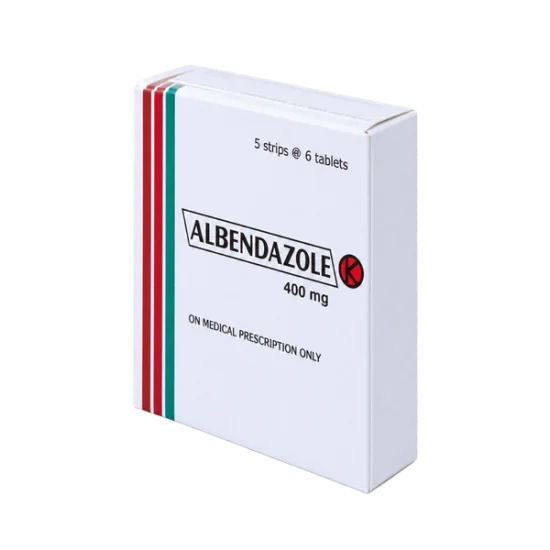
I used albendazole for a confirmed intestinal worm infection. The stomach discomfort settled after a day, but the itching did not disappear immediately. I kept the doses written on a calendar and did not repeat one early.
9 Oct 2026
Albendazole
Albendazole is an antihelmintic medicine used for selected susceptible helminth infections. It may be used for intestinal infections such as pinworm and hookworm, or for specialist-directed treatment…
Albendazole is an antihelmintic medicine used for selected susceptible helminth infections. It may be used for intestinal infections such as pinworm and hookworm, or for specialist-directed treatment of neurocysticercosis and cystic hydatid disease.
Product information
Albendazole belongs to the antihelmintics, a class of medicines that targets parasitic worms. The amount per intake is set individually for each person rather than being one fixed number for everyone.
Ingredients
Albendazole is supplied here as tablets. The active ingredient is albendazole, a benzimidazole antihelmintic.
The tablet strength describes the amount contained in one tablet. It does not mean that every infection requires one tablet, that every patient needs the same schedule, or that treatment should be repeated automatically. The amount per intake is set individually for each person according to the parasite, body weight, age, organ function and treatment objective.
Albendazole tablets may be prescribed for intestinal infections or as part of a longer regimen for tissue infections. The tablet should be used only through the treatment plan supplied for the diagnosed condition.
Therapeutic indications
Treatment depends on the parasite and where it is located:
- Pinworm infection: affects the intestine and may cause night-time anal itching.
- Hookworm infection: can affect the intestine and, in heavier infections, contribute to blood loss and anaemia.
- Neurocysticercosis: involves larval tapeworm cysts in the nervous system and requires specialist-directed treatment.
- Cystic hydatid disease: is caused by larval Echinococcus and may affect organs such as the liver or lungs.
- Other susceptible helminth infections: treatment depends on confirmed or strongly suspected parasitic disease.
Intestinal infections and tissue infections are managed differently. A short intestinal course may be sufficient for some worms, while neurocysticercosis or cystic hydatid disease can require repeated treatment, additional medicines and laboratory monitoring. Albendazole’s approved uses vary between jurisdictions; Australian prescribing decisions should follow Therapeutic Goods Administration information and the clinician’s diagnosis [1].
Targeted Parasitic Conditions
Albendazole acts on the parasite itself, so the choice of treatment depends on the organism. Pinworm and hookworm are intestinal examples. Neurocysticercosis and cystic hydatid disease are systemic conditions in which parasites or cysts occur outside the bowel.
Neurocysticercosis deserves extra care because killing cysts can trigger inflammation around affected tissue. Anticonvulsant treatment, corticosteroids and neurological monitoring may be needed in selected cases. Cystic hydatid disease may require prolonged therapy, surgery or another specialist procedure depending on cyst location and activity. WHO guidance places these infections within a broader programme of diagnosis, treatment and prevention rather than treating them as routine self-care conditions [2].
Directions for use
The amount per intake is set individually rather than being one fixed number for every person. Treatment may involve a single administration, repeated administrations or a longer course, depending on the parasite and its location.
Key administration principles include:
- Take the prescribed amount at the specified interval.
- Use food exactly as directed for the treatment plan; fatty food can increase albendazole absorption.
- Swallow the tablet with water unless a clinician has provided another administration method.
- Do not add extra doses because symptoms persist after the first administration.
- If a dose is missed, take it when remembered unless the next scheduled dose is near; do not double the next intake.
- Complete the planned course for tissue infections, even if symptoms improve earlier.
- Keep a record of treatment dates when repeated courses or household treatment are involved.
For neurocysticercosis and cystic hydatid disease, treatment may require liver tests, blood counts and clinical review. The schedule can change if laboratory results, imaging or adverse effects require adjustment.
Albendazole is absorbed variably from the digestive tract. Absorption increases when taken with a fatty meal, which can matter during treatment of tissue infections where higher systemic exposure is intended. The prescribing plan should specify whether food is required for the particular infection.
When not to use it
- Active liver disease or persistently abnormal liver tests.
- A history of bone-marrow suppression or unexplained low blood counts.
- Pregnancy or possible pregnancy, especially during the first trimester.
- Breastfeeding, where the treatment benefit and infant exposure require assessment.
- Neurocysticercosis with seizures, raised intracranial pressure or eye involvement.
- Treatment with medicines that affect liver metabolism.
- Previous severe reaction to an antiparasitic medicine.
Albendazole is not suitable for everyone. It should not be used by a person with a known serious allergy to albendazole or related benzimidazole medicines.
For prolonged treatment, liver function and blood counts may be monitored before and during therapy. Women who could become pregnant may require pregnancy assessment before treatment, depending on the regimen. The TGA product information provides the relevant Australian warnings and precautions for albendazole-containing therapy [5].
When this is not for you
This medicine is not for you if you have a known severe reaction to albendazole, unexplained serious liver disease, or a treatment plan that requires a different antiparasitic agent. It is also unsuitable for treating a cold, influenza or a bacterial infection.
Unwanted effects
Common effects can include abdominal pain, nausea, vomiting, headache, dizziness and diarrhoea. These symptoms may come from the medicine, the infection, or both. Taking the tablet with the permitted food arrangement may reduce stomach discomfort for some people, although it does not prevent every adverse effect.
During prolonged or high-exposure treatment, clinically important reactions can include liver enzyme elevation, reduced blood-cell counts, fever, hair loss and severe skin reactions. Liver injury may present with yellowing of the skin or eyes, dark urine, pale stools, marked tiredness or persistent pain under the right ribs. Fever, unusual bruising, mouth ulcers or a widespread rash require prompt medical assessment.
Albendazole can cause neurological or inflammatory complications in some patients with neurocysticercosis because dying parasites may provoke swelling around cysts. New seizures, severe headache, confusion, weakness or vision changes need urgent assessment.
One practical detail is easy to miss: abnormal liver tests may occur before a person feels unwell. Blood monitoring matters during extended courses because symptoms are not a reliable early warning.
Mechanism of action
Albendazole binds to parasite beta-tubulin and interferes with microtubule formation. Microtubules support nutrient uptake, cell structure and internal transport. When this system is disrupted, susceptible worms lose access to energy sources and gradually die.
The main effect is depletion of parasite glycogen and reduced production of adenosine triphosphate, the molecule cells use for energy. This helps explain why symptom improvement may not be immediate: the parasite must be damaged or eliminated, and irritated tissue may need time to recover.
The European Medicines Agency recognises albendazole’s benzimidazole mechanism as central to its activity against susceptible helminths [3].
It targets worms. It is not a general antimicrobial.
Common mistakes
- Taking a second dose because itching or abdominal symptoms continue immediately after treatment.
- Using albendazole for a viral illness or a non-parasitic digestive problem.
- Treating a suspected tissue infection as though it were a short intestinal infection.
- Stopping a prolonged regimen when symptoms improve.
- Ignoring liver disease or failing to mention regular medicines.
- Crushing or chewing the tablet without checking whether the prescribed formulation allows it.
- Forgetting household hygiene measures in suspected pinworm infection.
- Assuming that every worm responds to the same antihelmintic.
One mistake deserves emphasis: a 400 mg tablet does not establish the duration of treatment. The infection determines the regimen, not the tablet size alone.
Comparison
Albendazole, mebendazole and praziquantel are antihelmintics, but they do not have identical target organisms or treatment roles.
| Medicine | Main pharmacological role | Practical distinction |
|---|---|---|
| Albendazole | Benzimidazole antihelmintic | Covers several intestinal and tissue helminth infections; the schedule depends strongly on the parasite |
| Mebendazole | Benzimidazole antihelmintic | Commonly used for selected intestinal worms; tissue infection coverage differs |
| Praziquantel | Anthelmintic with activity against several flatworms | Often selected for susceptible tapeworms and flukes rather than every roundworm infection |
Mebendazole and albendazole share a benzimidazole relationship, but one should not be substituted for the other without identifying the suspected parasite. Praziquantel works through a different pharmacological pathway and is used for different groups of worms. WHO treatment guidance supports selecting the agent according to parasite species, disease site and clinical severity rather than choosing by symptom alone [4].
What doctors say
In clinical practice, physicians first identify the probable parasite and disease site before selecting the regimen. A tablet that is appropriate for a simple intestinal infection may be inadequate for a tissue infection, while prolonged exposure may create monitoring requirements that do not apply to a single treatment.
Doctors also assess body weight, liver function, pregnancy status, neurological symptoms and the possibility of reinfection. For pinworm, household hygiene and treatment of close contacts may influence recurrence. For hookworm, clinicians may investigate anaemia when symptoms or blood results suggest chronic intestinal blood loss.
For neurocysticercosis, the treatment decision is often made with infectious-disease, neurological and imaging input. For cystic hydatid disease, surgery or interventional management may be considered alongside albendazole. Care requires more than albendazole.
A realistic expectation is gradual resolution rather than an instant change in symptoms. Persistent symptoms after treatment may reflect inflammation, reinfection, an incorrect diagnosis or a parasite that needs a different therapy.
What customers often ask
What is the best time of day to take Albendazole?
The best time depends on the prescribed regimen and whether food is intended to increase absorption. The 2024 TGA product information distinguishes between treatment situations, so the same tablet may be taken under different food instructions for different infections. Taking doses at a consistent time can reduce missed administrations during a repeated course. A morning or evening schedule is acceptable only when it matches the treatment plan. Keep the schedule written down.
Can alcohol be used while taking Albendazole?
Alcohol is best avoided during treatment, especially when the course is prolonged or liver tests are being monitored. Albendazole is processed by the liver, and alcohol can add hepatic stress or make nausea and dizziness harder to interpret. The 2022 EMA safety information supports attention to liver-related adverse effects during extended therapy. There is no useful benefit in combining alcohol with the medicine.
Can Albendazole be combined with other medicines or supplements?
Cimetidine, dexamethasone, praziquantel and theophylline require specific medication review because they may alter albendazole exposure or create additional monitoring needs. The 2023 WHO treatment guidance also supports checking the full regimen when treating systemic helminth disease. Tell the prescriber about regular supplements, herbal products and medicines for epilepsy or liver disease. Do not add another antiparasitic agent independently.
Which diet, exercise or habits help the result?
Use the food instructions attached to the individual treatment plan; fatty food can increase albendazole absorption, which may be intended for some tissue infections. Normal activity is generally guided by symptoms, but severe dizziness, weakness, neurological symptoms or abdominal illness should limit exertion. WHO guidance from 2023 supports handwashing, short fingernails, laundering sleepwear and cleaning frequently touched surfaces to reduce reinfection risk in pinworm control. Diet and exercise cannot replace the correct antihelmintic regimen.
Can the tablet be split, crushed or chewed?
Do not split, crush or chew the tablet unless the prescriber or dispensing pharmacist has confirmed that method for the specific product. Altering a tablet can make administration difficult and may affect how the dose is delivered. The 2021 FDA drug information for albendazole emphasises following the prescribed administration method and completing the selected regimen. If swallowing is difficult, arrange an appropriate dosage-form review rather than changing the tablet yourself.
Do you offer anonymous delivery?
Your order will be securely packed and shipped within 24 hours. This is exactly what your package will look like (images of an actual item sent). It has the size and look of a regular private letter (24x11x0.7 cm) and its contents cannot be seen.
Comparison
Sources
- Therapeutic Goods Administration (TGA) (2024). Australian product information for albendazole-containing medicines.
- World Health Organization (WHO) (2023). WHO guideline for the control and elimination of human schistosomiasis and soil-transmitted helminthiases.
- European Medicines Agency (EMA) (2022). Albendazole product information and pharmacological safety information.
- U.S. Food and Drug Administration (FDA) (2021). Albendazole prescribing information.
- National Institutes of Health, National Library of Medicine (2023). Albendazole: LiverTox clinical and pharmacological information.
How Buyers Rate Albendazole
Based on 3 reviews
The treatment was easy to take, and my abdominal symptoms improved over the following week. I had mild nausea after the first tablet, so I took later doses with the food arrangement I had been given. I had expected instant relief, which was unrealistic.
20 Oct 2026I was placed on a longer course for a tissue parasite and needed blood tests. The medicine itself was manageable, but fatigue and abnormal liver results meant the schedule had to be reviewed. That experience made the monitoring feel like part of the treatment, not an optional extra.
A longer course 4 Nov 2026