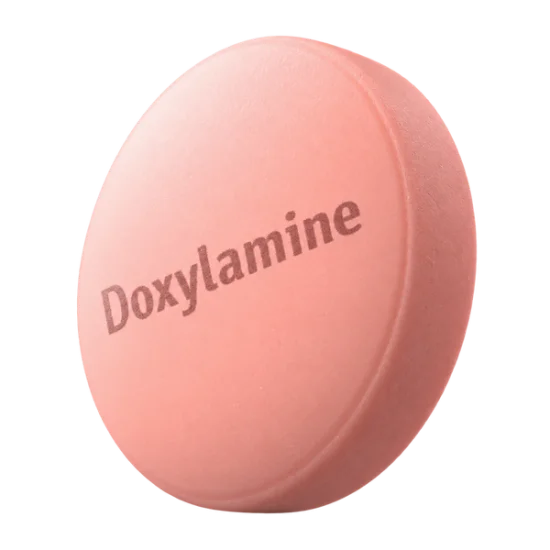
I used one tablet nightly for several nights during a short period of disrupted sleep. It helped me fall asleep, but I felt slow and dry-mouthed at breakfast, so I stopped using it on nights before early work.
Several nights 5 Oct 2026
Doxylamine
Adults with occasional, short-term sleeplessness may use Doxylamine to reduce sleep-onset difficulty. Doxylamine is a first-generation antihistamine with strong sedating activity caused by central…
Adults with occasional, short-term sleeplessness may use Doxylamine to reduce sleep-onset difficulty. Doxylamine is a first-generation antihistamine with strong sedating activity caused by central H1-receptor blockade. It can shorten the time needed to fall asleep.
Product information
Doxylamine is a first-generation antihistamine with strong sedating activity caused by central H1-receptor blockade. It can shorten the time needed to fall asleep, but its next-day drowsiness and anticholinergic effects require careful screening.
Ingredients
Doxylamine succinate is the standard salt form used in many oral sleep-aid formulations. A salt form helps create a stable tablet ingredient, while the doxylamine component produces the antihistamine and sedative effects. The tablets sold under the name Doxylamine contain the named active medicine; the exact dose differs between strengths and between users.
Therapeutic indications
Doxylamine is used for occasional insomnia, especially difficulty falling asleep during a brief period of disrupted sleep. It is not designed to correct chronic insomnia caused by untreated sleep apnoea, depression, anxiety, persistent pain, restless legs syndrome or an irregular sleep schedule.
Short-term use helps limit problems linked with tolerance and residual sedation. If sleeplessness continues repeatedly, increasing the amount or using Doxylamine night after night does not address the underlying cause. The American Academy of Sleep Medicine recommends behavioural approaches as the foundation for chronic insomnia care, while sedating antihistamines are not a routine long-term treatment [1].
Appropriate use
Doxylamine may be considered when:
- Sleep onset is difficult on an occasional basis.
- A temporary change in routine has disrupted sleep.
- The intended user can devote a full night to sleep.
- No contraindication or interacting sedative is present.
- Morning driving, machinery work or safety-critical activity is not scheduled soon after use.
The medicine is not a substitute for diagnosing persistent sleep disturbance. Loud snoring, witnessed pauses in breathing, morning headaches, unusual limb movements or severe daytime sleepiness can point to conditions that need targeted assessment.
Directions for use
- Take Doxylamine as an oral pill before the intended sleep period.
- The exact dose in mg is not provided and may differ between strengths and users; there is no single amount that suits everyone.
- Use it only for occasional, short-term sleeplessness rather than repeatedly night after night.
- Do not take it late or when insufficient time remains for a full night of sleep, because drowsiness may continue into the next morning.
- Do not combine it with another sedative.
When not to use it
Doxylamine is not suitable for everyone. Its anticholinergic and sedating properties can worsen several medical conditions, and the risk rises with age, multiple medicines and reduced kidney or liver function.
- Angle-closure glaucoma or a narrow anterior eye angle.
- Difficulty urinating, urinary retention or significant prostate enlargement.
- Allergy to doxylamine or another ethanolamine antihistamine.
- Severe breathing problems that could worsen with central sedation.
- Marked drowsiness from alcohol, sedatives or another medicine.
- Concomitant use of alcohol, benzodiazepines, opioid analgesics, sedative antidepressants, antipsychotics, sleep medicines or other tranquillizers.
- Concomitant use of anticholinergic medicines that can intensify dry mouth, blurred vision, constipation, rapid heartbeat and urinary retention.
- Unexplained, persistent or severe insomnia requiring investigation.
People with chronic bronchitis, emphysema, sleep apnoea, seizure disorders, liver disease or kidney disease need specific medical assessment before use. Pregnancy and breastfeeding also require an individual discussion because exposure, timing and the reason for treatment all affect the risk assessment.
When this is not for you
Doxylamine may not be right for you if you have glaucoma, trouble passing urine, prostate enlargement, serious breathing problems, sleep apnoea, liver or kidney disease, or persistent insomnia that needs investigation. Do not use it when alcohol or another sedating medicine is already making you drowsy, or if you need to drive, operate machinery or perform safety-critical work soon after taking it. Ask a clinician before use during pregnancy or breastfeeding.
Unwanted effects
Drowsiness is the expected pharmacological effect of Doxylamine, but it can become excessive. Residual sedation may affect attention, balance, reaction time and short-term memory after waking. The product information for doxylamine succinate identifies anticholinergic effects and central nervous system depression as important safety concerns [2].
| Effect | Practical significance |
|---|---|
| Dry mouth, blurred vision or constipation | Anticholinergic effects; fluids and gentle dietary measures may help unless restricted for another medical reason |
| Dizziness, poor balance or next-day drowsiness | Avoid driving, heights and machinery until alertness has fully returned |
| Difficulty urinating, confusion or severe weakness | Stop further use and seek prompt medical assessment, especially in older adults |
Dry mouth can feel surprisingly strong after one night. Sugar-free gum or frequent small sips of water may provide relief, while alcohol can make the mouth dryness and sedation worse.
Constipation deserves attention in people who already have slow bowel movements, abdominal obstruction or medicines with anticholinergic effects. Urinary retention may begin as a weak stream, hesitancy or a feeling that the bladder has not emptied.
Some people experience a “hangover” feeling the next morning. That response is more likely when the medicine is taken late, when sleep lasts fewer hours than planned, or when other sedating substances are involved.
Alcohol enhances the sedative effect of Doxylamine and can increase impaired coordination, confusion, falls and dangerously slow reactions. Avoid alcohol during use, including drinks consumed earlier in the evening when their effects may still be present.
Benzodiazepines, opioid analgesics, sedative antidepressants, antipsychotics, sleep medicines and other tranquillizers can add to central nervous system depression. The combined effect may be stronger than expected, with profound sleepiness, poor breathing effort or loss of safe coordination.
Anticholinergic medicines can intensify dry mouth, blurred vision, constipation, rapid heartbeat and urinary retention. Examples include atropine, some medicines for overactive bladder, certain tricyclic antidepressants and some antipsychotic medicines. The Australian Therapeutic Goods Administration and FDA safety information both treat additive sedation and anticholinergic burden as clinically relevant risks [3].
Avoid combining Doxylamine with another antihistamine unless a prescriber has specifically directed that combination. Taking two sedating antihistamines does not reliably improve sleep and can increase confusion, dry mouth, urinary retention and next-day impairment.

Mechanism of action
Doxylamine belongs to the ethanolamine group of first-generation antihistamines and acts mainly as a central H1 receptor blocker. It crosses the blood–brain barrier, where H1 blockade reduces histamine-driven wakefulness and promotes sleepiness. The same receptor activity that produces sedation can also cause dry mouth, blurred vision, constipation, dizziness and urinary difficulty.
Common mistakes
Several practical errors make the medicine feel less predictable:
- Taking it after midnight and still expecting a clear early morning.
- Adding alcohol because sleep has not started quickly.
- Taking another sedating antihistamine at the same time.
- Using it repeatedly for chronic insomnia without investigating the cause.
- Driving the next morning before testing whether alertness has fully returned.
- Ignoring a weak urinary stream, worsening constipation or new blurred vision.
- Taking a missed dose during the day to compensate for poor sleep the night before.
- Assuming that a higher amount will produce better-quality sleep.
A common misconception is that strong sedation equals restorative sleep. Doxylamine can promote sleepiness, but it does not correct circadian rhythm disruption, obstructive sleep apnoea or psychological causes of insomnia.
Another mistake is judging the medicine only by the first hour. The initial effect may seem mild, while residual drowsiness becomes obvious after waking. That delayed pattern is why a full night of planned sleep matters.
Comparison
Doxylamine and diphenhydramine are both first-generation antihistamines that enter the brain and block central H1 receptors. Their sedating effects can last into the following day, although individual responses vary with dose, age, metabolism, sleep duration and other medicines.
| Medicine or category | Main pharmacological feature | Main limitation |
|---|---|---|
| Doxylamine | Strong central H1 blockade with pronounced sedation | Next-day drowsiness and anticholinergic effects |
| Diphenhydramine | Central H1 blockade with sedating and anticholinergic activity | Tolerance, confusion and impaired coordination may develop with repeated use |
| Non-drug insomnia treatment | Targets sleep timing, habits and conditioned wakefulness | Requires repeated practice rather than a single-night effect |
Doxylamine may feel longer-lasting than diphenhydramine for some users, which can help maintain sleep but also increases the chance of morning impairment. Diphenhydramine may wear off sooner in some people, yet it still carries sedation and anticholinergic risks.
Neither option is a strong choice for chronic insomnia. A 2017 clinical practice guideline from the American Academy of Sleep Medicine advised against routine use of diphenhydramine for chronic insomnia because clinical benefits were limited and adverse effects remained relevant [1]. The same concern applies to relying on sedating antihistamines as a nightly long-term strategy.
What doctors say
In clinical practice, doctors usually treat Doxylamine as a short-term option for occasional sleeplessness, not as a solution for sleep disturbance that has lasted for weeks or months. The key questions are whether the patient can sleep for a full night, whether another sedative is being used and whether urinary or eye problems are present. A clinician will also look for warning signs of sleep apnoea, depression, mania, substance-related sleep disruption and medication-induced insomnia. Treating the symptom without identifying the cause can delay appropriate care. Older adults need extra caution. Age-related changes in drug clearance, balance and cognitive reserve make confusion, falls and urinary retention more likely. The American Geriatrics Society Beers Criteria identifies first-generation antihistamines as potentially inappropriate for many older adults because of their anticholinergic burden [4].
What customers often ask
What should be discussed with a doctor before starting Doxylamine?
Discuss glaucoma, prostate enlargement, urinary difficulty, breathing disorders, pregnancy, breastfeeding, liver or kidney disease and any history of severe reactions to antihistamines. Include medicines for anxiety, pain, allergies, bladder symptoms and depression because several can increase sedation or anticholinergic effects. TGA consumer medicine information published in 2023 emphasizes screening for additive sedation and age-related sensitivity.
Can alcohol be used while taking Doxylamine?
Alcohol should be avoided because it adds to Doxylamine-related sleepiness, impaired coordination and slowed reactions. The combination can also worsen confusion, dizziness and breathing suppression when other sedatives are present. FDA doxylamine product information published in 2023 warns that alcohol and sedative medicines can intensify central nervous system effects.
What should be done if the expected sleep benefit does not occur?
Do not take an extra tablet during the same night and do not combine Doxylamine with alcohol or another sleep aid. Persistent lack of benefit may indicate an underlying sleep disorder, an unsuitable treatment approach or an interaction with another medicine. WHO guidance published in 2023 supports assessment of persistent symptoms and attention to behavioural sleep measures rather than repeated unsupervised dose increases.
Is Doxylamine suitable for older adults?
Older adults are more vulnerable to confusion, falls, urinary retention, constipation, blurred vision and prolonged sedation. Reduced clearance and multiple medicines can make a usual adult dose feel excessive, even when the person has previously tolerated other antihistamines. The American Geriatrics Society Beers Criteria published in 2023 identifies strong anticholinergic medicines as a concern in older people.
How does Doxylamine differ from diphenhydramine?
Both medicines are first-generation H1 antihistamines that cross the blood–brain barrier and cause sedation. Doxylamine may produce a longer-lasting sedative effect for some people, while diphenhydramine may feel shorter-acting in others; neither response is guaranteed. A 2017 American Academy of Sleep Medicine guideline found insufficient support for routine antihistamine use in chronic insomnia, so the choice between these medicines should not become a nightly self-treatment plan.
How long does one dose of Doxylamine keep working?
One dose is intended to support sleep across the planned night, but sedation can continue into the morning. The duration varies with the formulation, individual metabolism, age, other medicines, alcohol exposure and the number of hours available for sleep. FDA doxylamine labelling published in 2023 advises allowing sufficient time for sleep and avoiding activities requiring full alertness until the sedative effect has cleared.
Do you offer anonymous delivery?
Your order will be securely packed and shipped within 24 hours. This is exactly what your package will look like (images of an actual item sent). It has the size and look of a regular private letter (24x11x0.7 cm) and its contents cannot be seen.
Comparison
Sources
- American Academy of Sleep Medicine (2017). The Clinical Practice Guideline for the Pharmacologic Treatment of Chronic Insomnia in Adults
- U.S. Food and Drug Administration (2023). Doxylamine succinate labeling
- Therapeutic Goods Administration (2023). Consumer Medicine Information — doxylamine succinate
- American Geriatrics Society (2023). American Geriatrics Society 2023 Updated AGS Beers Criteria for Potentially Inappropriate Medication Use in Older Adults
How Buyers Rate Doxylamine
Based on 4 reviews
I used one tablet for one night, which made me sleep through the night, though I woke with poor balance and needed extra time before walking safely. I did not continue after noticing that my urinary stream had become weaker.
One night 13 Oct 2026I used one tablet for one night after several late nights and found the sedation useful. The next morning was harder than expected, with heavy eyelids and reduced concentration, especially after taking it later than planned.
One night 22 Oct 2026I used one tablet nightly for several nights during a brief bout of insomnia, and I liked that I did not need to keep waking. Dry mouth and constipation became annoying after repeated use, so I reserved it for occasional situations rather than using it every night.
Several nights 31 Oct 2026