Skip to content
In Stock Micogel
Antifungals

Micogel

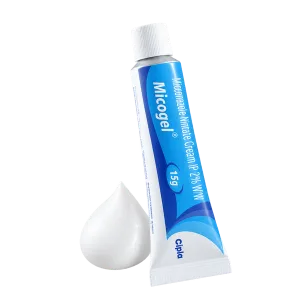
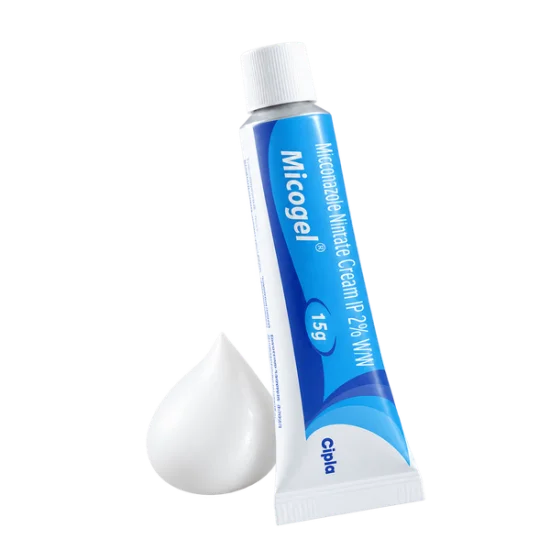
Micogel is a 2% miconazole nitrate gel applied to affected skin for superficial fungal and yeast infections. It is used when a topical antifungal is appropriate, including some Candida-related rashes…

Guaranteed quality Original product
Delivery: from 4 days Discreet shipping
24/7 Support Always available
Active ingredient: Miconazole
Select pack Package Per unit Price
$ 140.62 $ 140.62
$ 72.09 $ 281.24 $ 144.18 Save 49%
$ 49.84 $ 421.86 $ 149.52 Save 65%
$ 43.61 $ 562.48 $ 174.44 Save 69%
Best value $ 42.01 $ 703.10 $ 210.04 Save 70%

Free delivery on orders from $ 356.00, free express delivery from $ 534.00

Secure payment methods:
VISA AMEX JCB DISCOVER

Micogel is a 2% miconazole nitrate gel applied to affected skin for superficial fungal and yeast infections. It is used when a topical antifungal is appropriate, including some Candida-related rashes and other susceptible skin infections. The gel works directly at the skin surface to limit fungal growth.

Product information

Micogel contains miconazole nitrate 2% w/w in a topical gel supplied in a tube. Miconazole belongs to the imidazole antifungal class and is used for superficial fungal infections involving the skin.

Ingredients

Micogel’s active ingredient is miconazole nitrate 2% w/w. Miconazole is an imidazole antifungal.

Therapeutic indications

The product may be relevant to conditions such as tinea and selected Candida infections, although redness or itching can also result from eczema, allergy, bacterial infection, or another skin disorder.

The product’s main clinical role is:

  • treating susceptible superficial fungal growth on the skin;
  • helping manage some yeast-related skin rashes, including Candida-associated irritation;
  • reducing fungal growth through a topical antifungal mechanism;
  • providing treatment without systemic exposure expected from an oral antifungal, although some absorption can occur through damaged or extensive skin.

Miconazole may be used for conditions such as tinea cruris, commonly called jock itch, when the diagnosis is consistent with a superficial fungal infection. Clotrimazole can also be used for some cases of tinea cruris. Neither option is automatically superior for every person.

Directions for use

The amount and frequency of Micogel use depend on the purpose of treatment and are agreed with a doctor or pharmacist. The application route is topical.

  • Clean the affected skin gently.
  • Dry the area thoroughly, including between skin folds.
  • Apply a thin layer of Micogel to the affected skin as directed.
  • Wash your hands before and after application, unless the hands are the treatment site.
  • Keep the gel away from the eyes, mouth, and other mucous membranes.
  • Continue for the agreed course rather than stopping as soon as itching improves.
  • Avoid tight or airtight coverings unless a clinician specifically directs their use.

A missed application should not be replaced by applying a thick layer. Apply the next amount when remembered if it is not nearly time for the next scheduled application; otherwise, skip the missed application and resume the usual plan. Do not double the amount.

Micogel is intended for external use. Do not apply it into the eye, swallow it, or use it on extensive broken skin without specific clinical direction. A damaged skin barrier can increase irritation and absorption.

A thin film is usually preferable to a heavy coating. Excess gel does not clear an infection faster and can leave the area wet, sticky, and more irritated.

Towels, clothing, and bedding that remain damp can contribute to repeated moisture and friction around affected skin. Wash these items regularly and allow them to dry fully. Avoid sharing towels during an active skin infection.

When not to use it

Micogel is not appropriate for you if you have previously had an allergic reaction to miconazole, other imidazole antifungals, or an ingredient in the gel. It also needs clinical review before use on the face, around the eyes, on genital mucosa, or over large areas of broken skin.

Extra caution is needed in the following situations:

  • pregnancy or breastfeeding;
  • treatment of an infant or young child;
  • extensive, weeping, cracked, or infected skin;
  • a rash that has not been diagnosed;
  • recurrent fungal symptoms;
  • use of another medicated cream, ointment, or gel on the same area;
  • use of warfarin or another medicine requiring careful monitoring;
  • previous severe reaction to topical antifungals.

Miconazole can interact with warfarin, especially when absorption is increased through damaged skin or extensive use. Signs of excessive anticoagulation, such as unusual bruising, prolonged bleeding, blood in urine, or black stools, require prompt medical attention.

Do not place an occlusive dressing over Micogel unless directed. Occlusion increases warmth, moisture, and penetration through the skin. It can also worsen maceration in skin folds.

When this is not for you

This product may not be right for you if you have ever reacted badly to miconazole or similar antifungal medicines. Ask a clinician before using it on your face, near your eyes, on genital mucosa, on large areas of damaged skin, during pregnancy or breastfeeding, or for a young child. Do not use it for every red or itchy rash, especially if the rash is spreading, keeps returning, or may be eczema, psoriasis, dermatitis, a bacterial infection, or a viral condition.

Unwanted effects

Topical miconazole is generally used for local treatment, but application-site reactions can occur. Possible effects include:

  • burning or stinging;
  • itching;
  • redness;
  • irritation;
  • dryness or discomfort;
  • rash or worsening local inflammation.

A brief mild stinging sensation can occur on irritated skin. A reaction that becomes stronger after each application, spreads beyond the treated area, or continues after treatment needs review. The cause may be sensitivity to miconazole, an excipient, friction, moisture, or an incorrect original diagnosis.

Stop applying the gel and seek urgent medical help for facial or lip swelling, breathing difficulty, widespread blistering, faintness, or rapidly developing swelling. These symptoms can indicate a serious allergic reaction.

Headache is not the typical local effect expected from a small area of topical treatment, but it has been reported with some miconazole-containing formulations. A severe or persistent headache should be assessed in context, especially if other symptoms occur.

Contact dermatitis can resemble fungal infection. It may produce intense burning, sharply defined redness, or worsening symptoms soon after each application. Continuing to apply more gel can intensify the problem if the active ingredient or another component is responsible.

Do not test the product on a large area when a small treated area is enough. Marked burning, swelling, or a rapidly worsening rash should prompt a pause and medical review rather than repeated applications.

Mechanism of action

It interferes with the production of ergosterol, a substance fungi need to maintain their cell membrane. The damaged membrane limits fungal growth and can lead to loss of fungal viability [1].

The action is local. The gel is spread over the affected skin so the active ingredient can contact the organism at the site of infection. It does not work by numbing the skin, suppressing the immune system, or reducing inflammation through a corticosteroid effect.

The FDA’s miconazole topical product information describes local reactions and advises attention to clinically relevant interactions [2].

Common mistakes

Several practical errors make topical antifungal treatment less successful:

  • applying the gel only to the most itchy spot while missing the surrounding affected skin;
  • using a thick layer in the belief that more product works faster;
  • stopping after one or two comfortable days;
  • applying the gel to wet skin;
  • covering the area tightly with plastic or airtight clothing;
  • using leftover steroid cream because the rash looks inflamed;
  • mixing several medicated products on the same site without advice;
  • sharing towels, clothing, or sports equipment;
  • treating a recurring rash repeatedly without confirming the diagnosis;
  • applying the gel near the eyes or inside the mouth.

One commonly missed detail is the treatment margin. Fungal rashes can extend slightly beyond the most visible edge, so a clinician or pharmacist may advise covering the affected area and a small surrounding margin with a thin film.

Another is moisture control. Changing damp clothing after exercise, drying skin folds carefully, and choosing breathable clothing can support treatment. These measures do not replace Micogel, but they reduce conditions that favour persistent irritation.

If symptoms improve and then return repeatedly, record the treatment dates, body site, and products used. That pattern can help a clinician distinguish reinfection from dermatitis or another diagnosis.

Comparison

Miconazole and clotrimazole are both imidazole antifungals. They share a broad mechanism, yet the choice depends on the diagnosed infection, the treatment site, the formulation, previous reactions, and the instructions associated with the specific product.

Treatment approach Main pharmacological feature Clinical limitation
Micogel Miconazole nitrate 2% topical gel Not suitable for every itchy or inflamed rash
Clotrimazole topical product Imidazole antifungal The appropriate formulation and application schedule vary
Steroid-antifungal combination Antifungal plus corticosteroid action Steroid exposure can mask infection and cause skin changes with unsuitable use

A steroid combination is not automatically a stronger antifungal. Its additional anti-inflammatory action may be useful in selected situations, yet it also creates extra cautions involving thin skin, prolonged treatment, children, and undiagnosed rashes.

What doctors say

In clinical practice, the first useful distinction is between a plain antifungal and an antifungal combined with a steroid. Micogel provides miconazole without fluocinolone, so it targets fungal growth without adding corticosteroid exposure.

Doctors and pharmacists usually look at the site, border, scale, moisture, duration, and pattern of recurrence before choosing a topical treatment. Groin and skin-fold infections often become more persistent when sweat, friction, synthetic clothing, or incomplete drying continues during treatment.

A plain antifungal may be preferred when fungal infection is the leading diagnosis and inflammation is manageable. A steroid-containing combination may be considered only for a defined inflammatory presentation and for a limited period, with careful attention to the treated site.

The WHO recognises imidazole antifungals as an established treatment group for superficial fungal disease, while the EMA’s miconazole product information explains the importance of route, site, and formulation when assessing safety [3].

A useful clinical expectation is gradual improvement rather than instant disappearance. Itching may settle before scaling or colour change resolves. That change does not prove that fungal growth has been eradicated.

What customers often ask

What should I do after missing an application?

Apply the next amount when you remember if the next scheduled application is not due soon. If it is nearly time for the next application, skip the missed amount and continue with the usual schedule. Do not apply extra gel to compensate. The EMA’s 2024 product information for topical miconazole products uses the same practical principle: resume treatment without doubling the application.

How soon should Micogel start to feel effective?

Some people notice less itching or burning before the visible rash has cleared, while others need longer before symptoms change. Improvement depends on the organism, infection site, skin condition, and regular application. A rash that spreads, becomes painful, or shows no meaningful improvement during the expected course needs review. WHO guidance from 2023 describes topical antifungal treatment as condition-dependent rather than an instant symptom suppressor.

Do you offer anonymous delivery?

Your order will be securely packed and shipped within 24 hours. This is exactly what your package will look like (images of an actual item sent). It has the size and look of a regular private letter (24x11x0.7 cm) and its contents cannot be seen.

Comparison

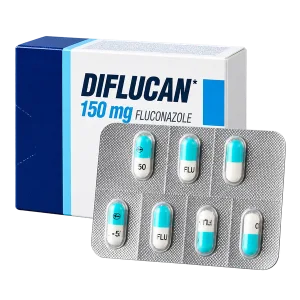
Diflucan

Active ingredient: Fluconazole
100mg 150mg 200mg 400mg 50mg
From $ 185.12
pills
3.5 (5)

Micogel Current

Active ingredient: Miconazole
2%
From $ 140.62
tubes
3.8 (3)

How the medicines for Antifungals compare

Sources

  1. U.S. Food and Drug Administration (2022). Miconazole nitrate topical product labeling
  2. U.S. National Library of Medicine (2023). DailyMed: miconazole nitrate topical cream labeling
  3. European Medicines Agency (2022). Miconazole-containing medicinal product information and Summary of Product Characteristics (SmPC)

How Buyers Rate Micogel

Based on 3 reviews

Craig, 67 Verified
Rating: 5 out of 5

The itching eased first, and the skin looked less angry after that. I had to remind myself not to apply a thick layer because it made the area feel wetter.

Several days 17 Oct 2026
James, 46 Verified
Rating: 4 out of 5

The burning was mild at the beginning. I stopped too early, and the irritation returned, so I needed advice about finishing the course and keeping the area dry.

31 Oct 2026
David, 60 Verified
Rating: 2.5 out of 5

The rash became more uncomfortable after each application. I stopped and had it checked because it turned out that the original diagnosis needed reviewing.

14 Nov 2026
Get our free app Shop faster and track your orders 3.8 · 491 reviews Install