My reflux settled after several days, and I could sleep without the burning in my chest. I still had mild bloating during the first week, so the improvement was useful but not completely comfortable.
The first week 12 Nov 2026
Pariet
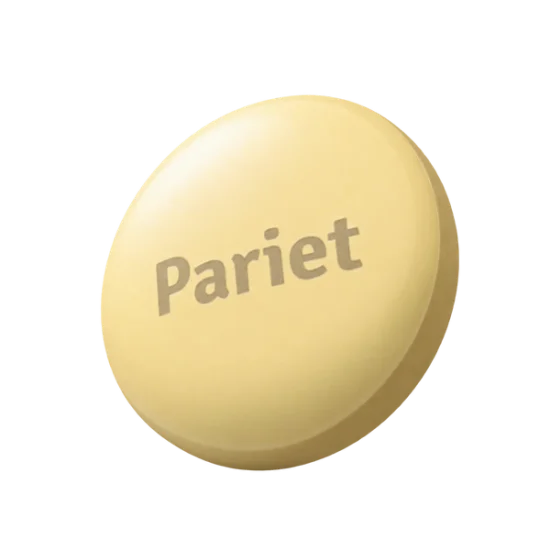
Pariet tablets contain rabeprazole sodium, a proton pump inhibitor for conditions linked to excess stomach acid. It is used in adults for reflux disease, ulcers and selected Helicobacter pylori…
Pariet tablets contain rabeprazole sodium, a proton pump inhibitor for conditions linked to excess stomach acid. It is used in adults for reflux disease, ulcers and selected Helicobacter pylori treatment regimens. Rabeprazole reduces acid secretion by blocking the gastric proton pump.
Product information
It is used in adults for reflux disease, ulcers and selected Helicobacter pylori treatment regimens. Rabeprazole reduces acid secretion by blocking the gastric proton pump.
Ingredients
Pariet contains rabeprazole sodium as its active pharmaceutical ingredient. Rabeprazole belongs to the proton pump inhibitor class, also called PPIs. The product is supplied as oral tablets designed to deliver rabeprazole through the digestive tract.
Rabeprazole is an acid-labile compound. The tablet formulation protects the active ingredient from being broken down too early in the stomach, allowing absorption before the medicine reaches the acid-secreting cells.
- Active ingredient: rabeprazole sodium
- Drug class: proton pump inhibitor
- Dosage form: oral tablet
- Primary pharmacological effect: reduction of gastric acid secretion
- Common clinical uses: gastro-oesophageal reflux disease, peptic ulcer disease and combination treatment for H. pylori infection
Pariet tablets are generally swallowed rather than chewed or crushed. The product information for rabeprazole medicines describes delayed-release administration because the formulation influences where the active ingredient becomes available.
Therapeutic indications
Pariet may be used when gastric acid contributes to symptoms or tissue injury. Common treatment categories include reflux disease, gastric ulcer, duodenal ulcer and acid-related dyspepsia. The exact regimen depends on the diagnosed condition.
| Clinical category | Therapeutic role |
|---|---|
| Reflux disease | Reduces acid exposure and supports healing of acid-related oesophageal irritation |
| Gastric or duodenal ulcer | Supports ulcer healing by lowering gastric acidity |
| H. pylori infection | Forms part of a combination regimen with antibacterial medicines |
A gastric ulcer develops in the stomach lining. A duodenal ulcer develops in the first part of the small intestine. Both can involve H. pylori, non-steroidal anti-inflammatory medicines, smoking, acid exposure and other factors.
Chronic gastritis describes ongoing inflammation of the stomach lining. Rabeprazole may reduce acid-related irritation, but the treatment plan must address the cause. For example, H. pylori gastritis requires antibacterial therapy rather than acid suppression alone.
The National Institute for Health and Care Excellence links proton pump inhibitor treatment with management of reflux and ulcer-related conditions, while stressing that treatment should match the clinical diagnosis [2]. Persistent upper abdominal pain, vomiting blood, black stools, unexplained weight loss or difficulty swallowing requires urgent medical assessment.
Role of Pariet in Helicobacter pylori eradication
Helicobacter pylori is a bacterium that can live in the stomach lining. It is associated with gastritis, peptic ulcers and an increased long-term risk of gastric complications in some patients.
Pariet does not eradicate H. pylori on its own. It is combined with antibiotics, and the exact combination depends on local resistance patterns, previous antibiotic exposure, allergy history and treatment guidelines.
Rabeprazole supports eradication therapy in two ways. First, it raises the stomach’s pH, creating conditions that may improve the stability and activity of selected antibiotics. Second, it reduces acid-related symptoms while the antibacterial medicines address the infection.
Treatment success depends on completing the prescribed combination. Stopping after symptoms improve can leave the infection untreated and may contribute to treatment failure. Antibiotic-associated nausea, altered taste or loose stools can occur during eradication therapy, so the prescribing clinician may need to adjust the regimen if reactions become severe.
The Maastricht VI/Florence Consensus Report describes proton pump inhibitors as components of combination regimens for H. pylori eradication and recommends attention to antibiotic resistance when selecting therapy [3].

Directions for use
How much Pariet to use and how often depends on the purpose of use and is agreed with a doctor or pharmacist. Reflux disease, ulcer treatment, maintenance therapy and H. pylori eradication use different regimens.
General administration principles include:
- Take the tablet by mouth.
- Swallow it whole with water.
- Do not chew, crush or split it unless a prescriber specifically confirms that the particular formulation allows this.
- Take it at the time selected for the prescribed regimen.
- Follow the complete duration for ulcer or H. pylori treatment.
- If a dose is missed, take it when remembered unless the next scheduled dose is near.
- Do not double the next dose to compensate for a missed tablet.
Many patients assume that taking a second tablet will provide faster relief. It does not work that way. Proton pump inhibition depends on activation in acid-producing cells and the turnover of proton pumps, so extra tablets can increase exposure without producing immediate symptom control.
Food instructions can vary by the clinical indication and formulation. The timing selected by the prescribing clinician should be followed rather than changing the schedule according to symptom intensity.
When not to use it
Pariet is not suitable for everyone. This medicine is not for you if:
- You have had a serious allergic reaction to rabeprazole, another proton pump inhibitor or an excipient in the tablet.
- You are taking rilpivirine-containing treatment, because gastric acid suppression can reduce rilpivirine absorption.
- You have symptoms that suggest gastrointestinal bleeding or another urgent abdominal condition without medical evaluation.
- You have severe liver disease and the treatment plan has not been reviewed.
- You are taking medicines with a narrow therapeutic range that may be affected by changes in gastric acidity or rabeprazole metabolism.
Rabeprazole can interact with medicines such as warfarin, methotrexate at high doses, digoxin, tacrolimus and selected antiretroviral treatments. The clinical significance depends on the dose, kidney function, liver function and duration of combined use.
When this is not for you
This medicine is not for you if:
- You have had a serious allergic reaction to rabeprazole, another proton pump inhibitor or an excipient in the tablet.
- You are taking rilpivirine-containing treatment.
- You have symptoms that suggest gastrointestinal bleeding or another urgent abdominal condition without medical evaluation.
- You have severe liver disease and the treatment plan has not been reviewed.
- You are taking medicines with a narrow therapeutic range that may be affected by changes in gastric acidity or rabeprazole metabolism.
People with previous low magnesium, vitamin B12 deficiency, osteoporosis, kidney disease or prolonged diuretic treatment may need additional monitoring. Pregnancy and breastfeeding require an individual assessment of expected benefit and potential exposure.
Unwanted effects
Common adverse effects associated with rabeprazole and other proton pump inhibitors include:
- Headache
- Abdominal pain
- Diarrhoea or constipation
- Nausea
- Flatulence
- Dizziness
- Skin rash
Most reactions are mild, but persistent or severe diarrhoea can indicate Clostridioides difficile infection, especially after antibiotic exposure or hospital treatment. Watery diarrhoea with fever or abdominal tenderness requires prompt medical attention.
Rare but clinically significant reactions include severe allergic responses, acute tubulointerstitial nephritis, severe skin reactions and low magnesium during prolonged treatment. Low magnesium can cause muscle cramps, tremor, weakness or abnormal heart rhythm.
Long-term proton pump inhibitor therapy has been associated with vitamin B12 deficiency, reduced magnesium levels, some intestinal infections and a possible increase in fracture risk in susceptible patients. These risks are influenced by duration, age, nutrition, kidney function and other medicines. They do not mean that every person using rabeprazole will develop a deficiency.
One practical detail is easy to miss: diarrhoea during H. pylori therapy may result from antibiotics rather than rabeprazole alone. Severe symptoms still need assessment because continuing the full combination without advice may be unsafe.
Another detail concerns blood tests. Rabeprazole can increase chromogranin A levels and may affect investigations for neuroendocrine tumours. The treating team should know about proton pump inhibitor use before such testing.
Mechanism of action
Rabeprazole sodium is converted into an active form in the strongly acidic environment close to the stomach’s parietal cells. These cells contain the hydrogen-potassium adenosine triphosphatase enzyme, commonly called the gastric proton pump.
The proton pump exchanges hydrogen ions for potassium ions. Hydrogen ions are released into the stomach and combine with chloride to form hydrochloric acid. Rabeprazole binds to the active proton pump and suppresses the final stage of acid secretion.
This action differs from simple antacid treatment. An antacid neutralises acid already present in the stomach, while rabeprazole reduces the production of new acid by the parietal cell. The effect can continue beyond the time when rabeprazole is present in the bloodstream because the inhibited pumps need to be replaced by newly produced pumps.
Acid suppression can help:
- Raise the pH of stomach contents.
- Reduce irritation of the oesophagus.
- Support healing of gastric and duodenal ulcers.
- Improve the activity of selected antibiotics against Helicobacter pylori.
- Reduce symptoms caused by acid reflux.
The Australian Therapeutic Goods Administration describes rabeprazole as a proton pump inhibitor used in acid-related gastrointestinal conditions [1]. The medicine does not remove the mechanical cause of reflux, repair a hiatus hernia or eradicate bacteria by itself. Its role is to control acid while the underlying condition is treated.
Acid control is also different from treatment with an H2-receptor antagonist. H2 medicines block histamine signalling at the parietal cell, whereas rabeprazole acts at the final acid-secretion step. The choice depends on the diagnosis, symptom pattern, previous treatment response and the clinician’s assessment.
Common mistakes
Several practical mistakes can reduce the benefit of Pariet:
- Crushing or chewing the tablet.
- Taking extra doses when relief is delayed.
- Stopping an H. pylori regimen once pain improves.
- Forgetting to mention warfarin, digoxin, methotrexate or HIV treatment.
- Treating recurring symptoms for months without reassessment.
- Assuming every episode of indigestion is caused by excess acid.
- Combining several acid-relief products without checking the full regimen.
- Missing doses because treatment is taken only when symptoms appear.
The most consequential error is often incomplete eradication treatment. Antibiotics need to be taken according to the prescribed schedule, even when the stomach feels better.
Patients may also overlook the effect of other medicines. Non-steroidal anti-inflammatory drugs can continue damaging the stomach lining while rabeprazole reduces acid, so symptom relief does not remove that risk.
Comparison
| Approach | Main action | Typical clinical role |
|---|---|---|
| Rabeprazole tablets | Block the gastric proton pump | Reflux, ulcer healing and combination treatment for H. pylori |
| H2-receptor antagonists | Reduce histamine-driven acid secretion | Selected reflux or acid-related symptoms |
| Antacids or alginates | Neutralise acid or form a physical barrier | Short-term symptom relief |
Rabeprazole is useful when sustained acid suppression is needed. H2-receptor antagonists may suit some intermittent symptoms, though tolerance can reduce their effect with repeated use. Antacids and alginates can provide quicker relief but do not treat H. pylori and do not replace ulcer-healing therapy.
The limitation of a proton pump inhibitor is that symptom improvement can conceal another condition. Ongoing symptoms despite treatment may indicate incorrect diagnosis, inadequate adherence, persistent H. pylori, medicine-induced injury or a non-acid cause.
What doctors say
In clinical practice, doctors often assess three separate issues before continuing rabeprazole: the likely source of symptoms, the response to treatment and the need for ongoing acid suppression.
A clinician may expect reflux symptoms to improve before the underlying oesophageal inflammation has fully healed. This distinction matters because stopping treatment immediately after symptom relief can allow irritation to return.
Doctors also look for alarm symptoms. Difficulty swallowing, recurrent vomiting, gastrointestinal bleeding, anaemia, unexplained weight loss and new persistent symptoms later in adulthood can require investigation rather than repeated self-treatment.
For ulcer disease, clinicians usually review exposure to non-steroidal anti-inflammatory medicines and assess whether H. pylori testing is needed. A patient taking ibuprofen, naproxen or aspirin may require a different risk-reduction plan, depending on the reason for treatment.
The prescribing clinician may also reduce, stop or change therapy after healing. Long-term treatment can be appropriate for selected conditions, but it should have a defined reason and periodic review.
What customers often ask
Is Pariet suitable for older adults?
Older adults can use rabeprazole when the indication, dose and treatment duration are appropriate. Age alone does not prohibit treatment, but kidney function, liver function, bone health and concurrent medicines deserve attention. The U.S. Food and Drug Administration (FDA) AcipHex prescribing information from 2022 describes precautions relevant to prolonged therapy and medicine interactions [4]. Older people should report persistent diarrhoea, confusion, muscle weakness or palpitations, which can signal complications requiring assessment.
What is the best time of day to take Pariet?
The best time depends on the reason for treatment and the regimen selected by the prescriber. Many acid-suppression schedules use a regular morning administration, while some conditions require a different schedule or more than one daily dose. The Therapeutic Goods Administration product information for Pariet published in 2023 supports following the prescribed regimen rather than a single universal timing rule [5]. Taking the tablet at the same planned time each day can reduce missed doses.
What should I do if the expected result does not come?
Do not keep increasing the dose independently when symptoms continue. Persistent heartburn may reflect an incorrect diagnosis, poor adherence, ongoing irritant exposure, an ulcer, H. pylori infection or a non-acid cause. The TGA product information from 2023 identifies continued symptoms and alarm features as reasons for clinical review rather than indefinite self-treatment. Urgent assessment is needed for vomiting blood, black stools, severe chest pain, progressive swallowing difficulty or unexplained weight loss.
Can Pariet tablets be split, crushed or chewed?
Rabeprazole tablets should generally be swallowed whole because the formulation protects the active ingredient from early breakdown in stomach acid. Chewing or crushing can interfere with delayed release and may reduce the intended delivery of rabeprazole. The TGA product information for Pariet, published in 2023, describes whole-tablet administration and delayed-release protection. A pharmacist or prescriber should confirm the correct approach if swallowing tablets is difficult.
How long does a course last, and is long-term use acceptable?
Treatment duration depends on the diagnosis, healing response and risk of recurrence. Reflux, ulcer disease and H. pylori eradication use different course lengths, so one schedule cannot be applied to every patient. NICE guidance updated in 2019 supports reviewing the ongoing need for acid suppression rather than continuing it without a clear indication. Long-term treatment can be appropriate for selected patients, with monitoring based on age, medical history and interacting medicines.
Do you offer anonymous delivery?
Your order will be securely packed and shipped within 24 hours. This is exactly what your package will look like (images of an actual item sent). It has the size and look of a regular private letter (24x11x0.7 cm) and its contents cannot be seen.
Comparison
Sources
- Therapeutic Goods Administration (2023). Australian Product Information: Pariet tablets and rabeprazole sodium.
- National Institute for Health and Care Excellence (2019). Gastro-oesophageal reflux disease and dyspepsia in adults: investigation and management.
- Malfertheiner, P., et al. (2022). Management of Helicobacter pylori infection: the Maastricht VI/Florence Consensus Report.
- U.S. Food and Drug Administration (2022). AcipHex (rabeprazole sodium) prescribing information.
- Therapeutic Goods Administration (2023). Product Information — Pariet (rabeprazole sodium).
How Buyers Rate Pariet
Based on 5 reviews
I used Pariet as part of treatment for an ulcer. The stomach pain improved before the course ended, but I finished the treatment because stopping early had caused problems for me with another ulcer medicine in the past.
Before the course ended 17 Nov 2026The tablet helped the night-time symptoms, although I had loose stools for a few days. The symptoms settled after the antibacterial part of treatment finished.
A few days 19 Oct 2026I expected instant relief after the first tablet and was disappointed. The burning became less frequent over the following days, which matched the explanation I received about proton pump inhibition.
The following days 24 Oct 2026Pariet controlled my reflux well for several months. I later needed a review because symptoms returned when I missed doses, and the doctor checked whether continued treatment was still appropriate.
Several months 3 Nov 2026