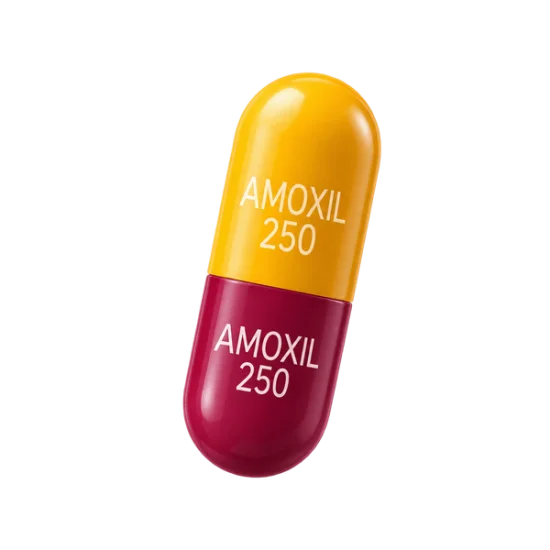
He used Amoxil for a diagnosed throat infection. After several doses, swallowing became easier and the fever settled, although he reported mild loose stools during the course.
31 Oct 2026
Amoxil
Amoxil is used for susceptible bacterial infections affecting the throat, ears, sinuses, chest, skin, and urinary tract. Its active ingredient, amoxicillin, is a beta-lactam antibiotic that damages…
Amoxil is used for susceptible bacterial infections affecting the throat, ears, sinuses, chest, skin, and urinary tract. Its active ingredient, amoxicillin, is a beta-lactam antibiotic that damages bacterial cell-wall formation.
Product information
Amoxil contains amoxicillin, an aminopenicillin in the beta-lactam antibiotic class. It is intended for oral administration, with the individual amount per intake selected according to the infection, age, body weight, kidney function, and local prescribing guidance.
Ingredients
Amoxil contains amoxicillin, an aminopenicillin in the beta-lactam antibiotic class.
Active ingredient and pharmacological class
Amoxicillin is related pharmacologically to other penicillin antibiotics, but it is not active against every bacterial species. Resistance can occur when bacteria produce beta-lactamase enzymes or develop changes to their cell-wall targets.
Amoxil is therefore used when the suspected or confirmed bacteria are likely to respond to amoxicillin. A viral cold, influenza, or uncomplicated viral sore throat does not improve because of this antibiotic.
A practical detail is easy to miss: improvement in symptoms does not prove that the infection has fully cleared. Stopping early can leave surviving bacteria behind and may contribute to treatment failure or resistance.
Therapeutic indications
Amoxicillin is prescribed for several infections caused by susceptible bacteria. The choice depends on the infection site, likely organisms, allergy history, resistance patterns, and whether a culture result is available.
Common clinical uses include:
- Streptococcal throat infection: Amoxicillin may treat confirmed or strongly suspected group A streptococcal pharyngitis.
- Tonsillitis: Treatment is appropriate when bacteria are responsible and the organism is susceptible.
- Middle ear infection: Acute otitis media may require amoxicillin, especially when bacterial infection is likely.
- Acute bacterial sinusitis: Amoxicillin may be selected for a bacterial sinus infection under local treatment guidance.
- Lower respiratory tract infection: Some bacterial bronchial or lung infections respond to amoxicillin, although the likely organism and severity influence antibiotic selection.
- Dental and other localised infections: Prescribing depends on the clinical diagnosis and local antimicrobial guidance.
| Infection | Main therapeutic aim | Typical clinical considerations |
|---|---|---|
| Streptococcal throat infection or tonsillitis | Eradicate susceptible bacteria and reduce complications | Testing, exposure history, allergy status, and local guidance influence treatment |
| Acute middle ear infection | Treat susceptible bacteria in the middle ear | Age, severity, recurrence, and recent antibiotic use matter |
| Bacterial sinus or chest infection | Reduce bacterial load and improve infection-related symptoms | Viral illness and resistant organisms require different management |
The Australian Therapeutic Guidelines approach distinguishes bacterial infections from self-limiting viral illnesses before antibiotic treatment is selected. A throat swab, ear examination, chest assessment, or other test may be used when the diagnosis is uncertain.
Paediatric and adult use
Children may receive amoxicillin, but the amount is calculated from body weight and kidney function rather than copied from an adult regimen. The capsule strength may also be unsuitable for a child who cannot swallow capsules or who needs a liquid dose.
Adults may require different dosing intervals for the same infection. Kidney impairment can increase amoxicillin exposure, so the prescriber may reduce the amount or extend the time between doses.
Respiratory Tract and Sinus Infection Management
Amoxicillin can treat selected bacterial respiratory infections, including some lower respiratory tract infections and acute bacterial infection of the sinuses. It does not treat viruses that cause most ordinary colds and many cases of acute cough.
In clinical practice, bacterial sinusitis becomes more likely when symptoms persist without improvement, become severe, or worsen after an initial period of recovery. Facial pain, purulent nasal discharge, and fever can support the diagnosis, but no single symptom proves that antibiotics are needed.
For lower respiratory tract infection, the treatment decision depends on the examination, breathing symptoms, chest findings, oxygen level, age, comorbidities, and severity. Community resistance patterns also matter. If pneumonia is suspected, a clinician may choose another antibiotic or combine treatments when amoxicillin alone does not cover the likely organisms.
The World Health Organization identifies antimicrobial resistance as a major factor in antibiotic selection and stewardship [2]. Taking amoxicillin for a viral illness exposes the person to adverse effects without treating the cause.
Combination Regimens for Helicobacter pylori and Peptic Ulcer Disease
Amoxicillin is used in combination regimens for Helicobacter pylori, a bacterium associated with peptic ulcer disease and some forms of chronic stomach inflammation. H. pylori can damage the stomach’s protective lining and contribute to ulcer formation.
Amoxicillin is not used alone for H. pylori eradication. Treatment combines an acid-suppressing medicine with other antibacterial agents selected according to resistance patterns, previous treatment, allergy status, and local guidance. The acid-suppressing component can improve the environment for healing, while the antibacterial combination targets the organism through different mechanisms.
The American College of Gastroenterology guidance published in 2024 emphasises resistance-aware treatment and confirmation of eradication after therapy [3]. A breath test or stool antigen test may be used after the appropriate interval.
A common mistake is assuming that disappearance of stomach pain proves eradication. Symptoms can improve before the infection has been cleared. Follow-up testing is used because treatment success cannot be judged reliably by symptoms alone.

Directions for use
The amount per intake is set individually rather than being one fixed number for every person. The prescriber chooses the regimen according to the infection, age, body weight, renal function, severity, and bacterial susceptibility.
Typical administration principles include:
- Take the prescribed capsule by mouth at the scheduled interval.
- Swallow the capsule with water.
- Space doses as evenly as practical across the day.
- Complete the prescribed course unless the prescriber changes it because of an adverse reaction or another clinical reason.
- Do not double the next dose after a missed dose.
- Keep a written schedule if several daily doses are difficult to remember.
For children, dosing is commonly weight-based. For people with reduced kidney function, the interval or amount may need adjustment. Severe infections can require a different treatment plan from mild localised infections.
If a dose is missed, take it when remembered unless the next scheduled dose is close. When the next dose is near, skip the missed dose and continue at the usual time. Taking two doses together increases the chance of stomach upset and does not reliably improve treatment.
When not to use it
Amoxicillin can interact with anticoagulants such as warfarin, sometimes affecting the international normalised ratio. Methotrexate toxicity may increase because penicillin antibiotics can reduce methotrexate clearance. Allopurinol may increase the likelihood of a rash. Hormonal contraceptive advice should be individualised, especially if vomiting or severe diarrhoea occurs.
Pregnancy and breastfeeding require an individual assessment of the infection and treatment options. Amoxicillin is used in pregnancy when clinically indicated, while breastfed infants should be monitored for diarrhoea, rash, or thrush.
When this is not for you
This medication is not for you if
- You have previously experienced anaphylaxis, angioedema, or another immediate severe reaction to amoxicillin, penicillin, or a related beta-lactam antibiotic.
- You have a current diagnosis in which the prescriber has identified a different treatment as necessary.
- You have severe kidney impairment and the dose has not been adjusted.
- You have had antibiotic-associated colitis and the expected benefit does not justify renewed exposure.
- You are taking another medicine that creates a clinically significant interaction requiring a different antibiotic or closer monitoring.
A penicillin allergy history needs detail. “It upset my stomach” is different from hives, swelling, breathing difficulty, or collapse. The latter symptoms suggest immediate hypersensitivity and should be treated as clinically significant.
Unwanted effects
The most frequent adverse effects involve the digestive system. Nausea, loose stools, abdominal discomfort, and diarrhoea can occur because antibiotics affect intestinal bacteria as well as the organisms causing the infection.
Skin reactions range from a mild rash to severe hypersensitivity. A delayed, mild rash may have several causes, including the infection itself, while hives, facial swelling, wheezing, or difficulty breathing require urgent medical attention.
Recognised risks include:
- nausea or vomiting;
- diarrhoea or abdominal discomfort;
- mild skin rash;
- headache;
- oral or vaginal thrush;
- immediate allergic reaction;
- antibiotic-associated colitis, including Clostridioides difficile infection;
- liver injury or cholestatic jaundice, which are uncommon;
- seizures, mainly in people receiving high exposure or those with significant kidney impairment.
Watery or bloody diarrhoea during treatment or after completion needs prompt medical assessment. Do not self-treat severe diarrhoea with an anti-diarrhoeal medicine before obtaining clinical advice.
Rashes during glandular fever need assessment. Amoxicillin can cause a marked rash in people with infectious mononucleosis, which is commonly caused by Epstein–Barr virus. That reaction does not automatically prove a lifelong penicillin allergy, so the event should be documented and assessed accurately.
Mechanism of action
Amoxicillin acts against susceptible bacteria by binding to penicillin-binding proteins. These proteins help build peptidoglycan, the structural material that gives a bacterial cell wall its strength. When cell-wall construction is disrupted, growing bacteria become unstable and die. The mechanism is described in the FDA prescribing information for amoxicillin [1].
Common mistakes
Several avoidable errors reduce the chance of a good outcome:
- Taking capsules only when symptoms feel severe.
- Stopping after the first improvement without a prescriber’s change to the plan.
- Doubling a missed dose.
- Using a leftover course for a new illness.
- Sharing capsules with a family member.
- Ignoring a history of immediate penicillin allergy.
- Failing to mention kidney disease or methotrexate treatment.
- Treating severe diarrhoea as an ordinary stomach upset.
- Assuming every sore throat or cough needs an antibiotic.
- Crushing or opening a formulation without confirming that it is suitable.
One subtle error is taking doses at irregular times because the person is asleep or away from home. The schedule should be planned before the first dose, especially when several daily doses are prescribed.
Comparison
Amoxil is an immediate-release amoxicillin capsule. Other amoxicillin presentations may use a different release design or dosage form, so they should not be substituted on a capsule-for-capsule basis.
| Formulation category | Release profile | Practical implication |
|---|---|---|
| Immediate-release capsule | Releases amoxicillin after oral administration | Doses are taken at prescribed intervals |
| Oral suspension | Immediate-release liquid formulation | Useful when swallowing capsules is difficult; volume is calculated from the required dose |
| Modified-release tablet | Designed to alter the release pattern | Cannot automatically replace an immediate-release capsule |
The active ingredient and release mechanism matter more than the product name. A modified-release formulation may have different administration instructions, while a liquid requires accurate measuring equipment and weight-based calculations.
What doctors say
Clinicians generally judge amoxicillin by three factors: whether the illness is bacterial, whether the suspected organism is susceptible, and whether the individual can take a penicillin antibiotic safely.
A doctor will usually ask about previous antibiotic reactions, kidney disease, pregnancy, breastfeeding, recent antibiotic exposure, and medicines such as warfarin or methotrexate. The history of the reaction matters more than the word “allergy” alone.
Treatment response also needs a realistic time frame. Fever, pain, and discharge may improve gradually rather than immediately. Worsening breathlessness, confusion, severe dehydration, persistent high fever, or rapidly spreading swelling can indicate a complication requiring urgent assessment.
The Therapeutic Goods Administration regulates medicines in Australia, while the EMA provides harmonised European scientific information on amoxicillin products. Their regulatory materials support the same practical principle: antibiotic treatment should match the diagnosed infection and the patient’s risk profile.
What customers often ask
Can children under 18 use Amoxil?
Children can use amoxicillin when a clinician diagnoses a suitable bacterial infection and selects a weight-based regimen. The required amount depends on body weight, age, kidney function, infection site, and severity. The Royal Children’s Hospital Melbourne paediatric guidance available in 2025 supports weight-based antibiotic prescribing rather than automatic adult dosing. Capsules may be unsuitable for a child who cannot swallow them safely.
What should I do after missing an Amoxil dose?
Take the missed dose when remembered unless the next dose is due soon. If the next dose is close, skip the missed dose and return to the normal schedule; do not take two doses together. The Australian Medicines Handbook guidance used in 2025 follows this approach for many oral antibiotics. A written schedule or phone reminder can help prevent repeated missed doses.
Can I drink alcohol while using Amoxil?
Alcohol does not create the specific severe reaction associated with some other antibiotics, but it can worsen nausea, dizziness, dehydration, or diarrhoea while you are unwell. Alcohol may also make it harder to recognise whether symptoms are improving or deteriorating. The NHS medicine information reviewed in 2025 advises moderation and attention to how the person feels. Avoid alcohol if the infection has caused vomiting, dehydration, liver problems, or marked weakness.
Which condition rules out Amoxil?
A previous immediate severe allergic reaction to penicillin or amoxicillin rules out routine use unless a specialist-led assessment establishes another safe plan. Symptoms such as facial swelling, wheezing, fainting, or widespread hives are urgent allergy signs. The TGA’s 2025 Australian Product Information framework identifies serious beta-lactam hypersensitivity as a contraindication. A past episode of mild nausea is not the same as anaphylaxis, but it should still be reported.
What should I discuss with a doctor before starting Amoxil?
Discuss any penicillin or cephalosporin reaction, kidney disease, liver disease, pregnancy, breastfeeding, recent antibiotic use, and current medicines. Warfarin, methotrexate, and allopurinol deserve specific mention because they can alter treatment risk or monitoring needs. The WHO antimicrobial stewardship guidance updated in 2023 supports choosing antibiotics according to diagnosis, susceptibility, and patient-specific factors. Also describe how long symptoms have lasted and whether they are improving, worsening, or recurring.
Do you offer anonymous delivery?
Your order will be securely packed and shipped within 24 hours. This is exactly what your package will look like (images of an actual item sent). It has the size and look of a regular private letter (24x11x0.7 cm) and its contents cannot be seen.
Comparison
Sources
- U.S. Food and Drug Administration (2023). Amoxicillin Capsules, Tablets, and Powder for Oral Suspension: Prescribing Information.
- World Health Organization (2023). Antimicrobial resistance: fact sheet.
- American College of Gastroenterology (2024). ACG Clinical Guideline: Treatment of Helicobacter pylori Infection.
How Buyers Rate Amoxil
Based on 3 reviews
He took the capsules for a chest infection and noticed improvement after a few days. He found the dosing schedule inconvenient and missed one dose, then continued without doubling the next capsule.
9 Nov 2026He stopped treatment early when his sinus pressure improved and symptoms returned several days later. His clinician reassessed the infection and explained why symptom relief does not always mean bacterial eradication.
11 Oct 2026