I used the gradual increase rather than rushing it. Nausea was strongest during the first week, then my evening snacking became easier to control. Sleep was lighter when I took the second dose too late. I used the prescribed dose for three weeks.
Three weeks 27 Oct 2026
Contrave
Contrave combines naltrexone and bupropion to influence appetite control and food-reward pathways in the brain. It is prescribed for adults with obesity, or overweight with weight-related health…
Contrave combines naltrexone and bupropion to influence appetite control and food-reward pathways in the brain. It is prescribed for adults with obesity, or overweight with weight-related health problems, alongside reduced-calorie eating and increased physical activity.
Product information
Contrave is an oral combination medicine containing naltrexone hydrochloride and bupropion hydrochloride. It belongs to the centrally acting pharmacotherapy category for chronic weight management and targets appetite regulation and food-reward pathways.
Ingredients
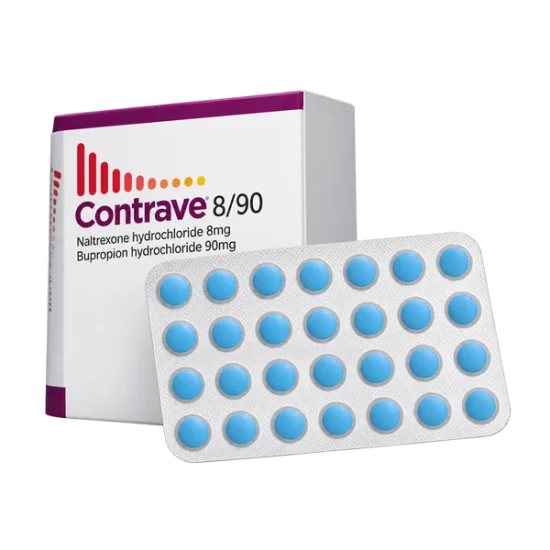
Contrave contains two active substances: naltrexone hydrochloride and bupropion hydrochloride. The amount to use and how often to take it depend on the treatment plan and are agreed with a doctor or pharmacist. The product is supplied as tablets in blister packaging.
Therapeutic indications
Contrave is used for chronic weight management in adults with obesity or adults who are overweight and have an associated condition such as type 2 diabetes, high blood pressure, or abnormal blood lipid levels. It is an adjunct treatment, meaning it works alongside dietary changes and physical activity rather than replacing them.
Indications for Chronic Weight Management
Clinical use is generally considered when excess weight is associated with medical risk and lifestyle measures alone have not produced sufficient progress. The treatment plan includes calorie reduction, movement, and monitoring of body weight, blood pressure, mood, sleep, and adverse effects.
Contrave is not intended for children. It is also unsuitable during pregnancy because intentional weight loss provides no therapeutic benefit during pregnancy and may harm fetal development.
Directions for use
Dose escalation is used to improve tolerability. The usual regimen progresses gradually toward a maintenance dose, with the exact schedule determined by the prescribing clinician or pharmacist according to the treatment plan.
- Take Contrave tablets orally.
- Swallow each tablet whole with water.
- Do not crush, split, or chew the tablets.
- Do not take more than the prescribed daily amount.
- Take doses at consistent times each day.
- Avoid taking the evening dose close to bedtime if it worsens insomnia.
- If a dose is missed, skip it and take the next scheduled dose. Do not double the next dose.
The prescriber normally reviews progress after a defined treatment period. If the expected weight reduction has not occurred after the appropriate assessment interval, treatment may be stopped because continuing without a meaningful response exposes the patient to adverse effects without a clear benefit.
Food does not remove the need for regular dosing. A very high-fat meal should be avoided around administration because it can increase exposure to both active ingredients.
One frequent mistake is treating the escalation schedule as optional. Starting at the maintenance dose can make nausea, dizziness, insomnia, and headache more difficult to tolerate.
When not to use it
Contraindications
Contrave is not for you if you:
- Has uncontrolled high blood pressure.
- Has a seizure disorder or a current condition that substantially increases seizure risk.
- Has current or previous anorexia nervosa or bulimia nervosa.
- Uses another medicine containing bupropion.
- Uses opioid pain medicines, opioid cough or cold products, opioid dependence treatment, or illicit opioids.
- Is undergoing regular opioid withdrawal treatment.
- Has recently stopped long-term opioids without an appropriate opioid-free interval.
- Has severe liver impairment.
- Has an allergy to naltrexone, bupropion, or an excipient in the tablets.
- Is pregnant or planning intentional weight loss during pregnancy.
- Is breastfeeding unless a clinician has specifically assessed the situation.
Opioid use is a central issue. Naltrexone blocks opioid receptors, so Contrave can reduce the effect of opioid analgesics and may precipitate withdrawal in someone who still has opioids in their system. Emergency pain treatment may also be harder because usual opioid doses may not work as expected.
Do not combine Contrave with bupropion-containing products such as WELLBUTRIN, WELLBUTRIN SR, WELLBUTRIN XL, APLENZIN, or ZYBAN. The combined bupropion exposure increases seizure risk and can produce duplicate therapy.
Monoamine oxidase inhibitors must not be combined with bupropion; an appropriate interval is required after stopping an MAOI. Other medicines that can affect seizure threshold, blood pressure, dopamine signalling, or hepatic metabolism also require a medication review.
When this is not for you
Bupropion lowers the seizure threshold. The seizure risk rises with higher doses and with factors such as a history of seizures, certain eating disorders, abrupt withdrawal from alcohol or sedatives, severe head injury, and medicines that also lower the seizure threshold.
Contrave can raise blood pressure and heart rate. Blood pressure should be controlled before treatment and monitored during dose escalation. People with uncontrolled hypertension should not use it.
Mood changes require prompt attention. Suicidal thoughts, worsening depression, unusual agitation, aggressive behaviour, hallucinations, or manic symptoms require urgent clinical assessment. The warning is relevant because bupropion belongs to a medicine class associated with neuropsychiatric monitoring, even though Contrave is used for weight management.
Other serious concerns include liver injury linked to naltrexone, severe allergic reactions, and angle-closure glaucoma in susceptible people. Eye pain, blurred vision, halos around lights, or sudden visual disturbance need urgent assessment.
Unwanted effects
The most frequently reported adverse effects include nausea, constipation, headache, vomiting, dizziness, dry mouth, diarrhoea, and difficulty sleeping. Nausea is often most noticeable during dose escalation and may settle as the body adapts.
In clinical trial data, nausea occurred in roughly one-third of participants, constipation in about one-fifth, and headache in fewer than one-fifth. Vomiting, dizziness, insomnia, dry mouth, and diarrhoea were also reported, generally at lower frequencies. The FDA prescribing information provides the adverse-event data and the warnings associated with the bupropion and naltrexone combination .
| Adverse effect | Practical response |
|---|---|
| Nausea or vomiting | Smaller meals, slower eating, adequate fluids, and avoiding high-fat meals may help |
| Constipation or dry mouth | Increase fluids and fibre gradually; regular walking may support bowel function |
| Headache, dizziness, or insomnia | Rise slowly, avoid late doses, and avoid driving until the effect is understood |
Constipation can be underestimated. It may become more troublesome when appetite falls and food or fluid intake drops sharply. A sudden increase in fibre without enough fluid can also cause bloating.
Dry mouth may increase the risk of dental discomfort if it persists. Sugar-free gum or frequent water intake can help, while alcohol may worsen both dryness and dizziness.
Contact the prescribing service promptly for persistent vomiting, severe abdominal pain, fainting, marked palpitations, or symptoms of dehydration. Urgent medical attention is required for facial swelling, difficulty breathing, severe rash, confusion, a seizure, or sudden major changes in mood.

Mechanism of action
The naltrexone component is an opioid receptor antagonist. Bupropion affects noradrenaline and dopamine signalling and is also used in medicines for depression and smoking cessation. Their combination targets appetite regulation and food-related reward signalling through different but connected pathways [1].
Contrave’s two active ingredients influence separate parts of the central nervous system. Naltrexone reduces opioid-receptor signalling, while bupropion increases activity in noradrenergic and dopaminergic pathways involved in motivation, appetite, and reward.
Bupropion stimulates neurons in the hypothalamus that participate in appetite regulation. It also influences the mesolimbic dopamine circuit, which contributes to the rewarding quality of food. Naltrexone may reduce the feedback signal that otherwise limits this appetite-control effect, allowing the combined treatment to act on both hunger and food cravings.
The result is not a direct fat-burning action. The intended effect is reduced appetite, fewer strong cravings, and better adherence to a lower-calorie eating pattern. Individual responses vary, and weight reduction is assessed over time rather than after a single tablet.
A useful practical distinction is that Contrave works through central appetite and reward pathways. A lipase inhibitor acts in the intestine, while a GLP-1 receptor agonist influences appetite and glucose-related signalling through a different hormonal pathway. These mechanisms create different benefits, limitations, and monitoring requirements.
The European Medicines Agency assessed the naltrexone–bupropion combination under the name Mysimba, while the Therapeutic Goods Administration regulates medicines supplied in Australia. The clinical evidence base includes randomised weight-management trials involving diet, exercise, and behavioural support [2].
Common mistakes
Several avoidable errors can reduce tolerability or create serious risk:
- Starting at the full maintenance dose instead of following gradual escalation.
- Taking a missed dose together with the next scheduled dose.
- Crushing or chewing the tablets.
- Taking the final dose late at night and then attributing insomnia to stress.
- Combining Contrave with another bupropion product.
- Taking opioid pain relief while naltrexone is active.
- Continuing treatment despite uncontrolled blood pressure.
- Ignoring worsening agitation, suicidal thoughts, or manic symptoms.
- Eating very large high-fat meals around dosing.
- Treating reduced appetite as permission to skip protein, fluids, or essential nutrients.
- Expecting the tablet to overcome minimal sleep, frequent alcohol use, or no dietary adjustment.
One subtle problem is under-eating during the first weeks. A sharp reduction in food intake can worsen dizziness, constipation, headache, and fatigue. Weight management still requires regular nourishment.
Another is relying on a single scale reading. Water retention and bowel changes can conceal short-term progress, while rapid loss may reflect dehydration rather than useful fat reduction.
Comparison
Contrave is an oral tablet treatment with a central nervous system mechanism. Other weight-management medicines may use injectable hormonal pathways, intestinal fat digestion, or stimulant-related appetite suppression.
| Treatment approach | Main mechanism and practical trade-off |
|---|---|
| Contrave | Oral naltrexone–bupropion; acts on appetite and food-reward pathways, with risks involving blood pressure, mood, seizures, and opioid interactions |
| Liraglutide, marketed as Saxenda | Injectable GLP-1 receptor agonist; may cause gastrointestinal effects and requires injection administration |
| Phentermine/topiramate, marketed as Qsymia | Oral combination affecting appetite and central nervous system signalling; may cause insomnia, cognitive effects, mood changes, or increased heart rate |
| Orlistat, marketed as Xenical | Intestinal lipase inhibitor; reduces dietary fat absorption but can cause oily stools, urgency, and gastrointestinal discomfort |
A GLP-1 receptor agonist may be considered when appetite control and glucose-related metabolic factors are central to treatment. Gastrointestinal effects and injection use can limit acceptability. Orlistat acts locally in the gut, yet bowel effects can be inconvenient and adherence may suffer when meals contain more fat.
Belviq and Belviq XR, which contained lorcaserin, are historical comparators rather than current treatment choices in many markets because lorcaserin was withdrawn from the United States market after a safety review. It should not be treated as an available alternative to Contrave.
What doctors say
In clinical practice, prescribers usually focus on three questions: whether the patient has a suitable indication, whether contraindications are absent, and whether the treatment produces a meaningful response without unacceptable adverse effects.
A doctor will often review blood pressure, pulse, psychiatric history, seizure risk, eating-disorder history, alcohol use, opioid exposure, liver disease, and current medicines before prescribing. These checks are essential because the same central effects that may reduce cravings can worsen insomnia, anxiety, agitation, or blood pressure in susceptible people.
Weight loss is only one outcome. Waist measurement, glucose control, mobility, sleep quality, and the ability to maintain dietary changes may also matter. The medicine cannot compensate for severe sleep deprivation, heavy alcohol intake, or a diet that remains highly energy-dense.
A practical clinical expectation is gradual change rather than a dramatic response after the first few doses. Nausea may appear early, while appetite changes can become clearer as the dose is increased. The prescriber may stop treatment if the response is inadequate or if adverse effects outweigh the benefit.
What customers often ask
How long does the effect of one Contrave dose last?
Contrave is designed for repeated daily dosing rather than occasional use. The two active ingredients are formulated to provide coverage across the dosing day, while the broader appetite and weight-management effect develops through consistent treatment. The FDA prescribing information reviewed in 2021 describes divided daily administration and gradual escalation rather than single-dose use . Do not take an extra tablet because appetite returns later in the day. The prescriber can reassess the plan if benefits or adverse effects change.
Can Contrave be combined with opioid medicines or supplements?
Contrave should not be combined with opioid pain medicines, opioid cough products, opioid dependence treatments, or illicit opioids because naltrexone blocks opioid receptors and may trigger withdrawal. Bupropion-containing medicines must also be avoided because duplicate exposure raises seizure risk. Ordinary vitamins do not automatically create the same interaction, but stimulant-containing supplements may worsen insomnia, heart rate, blood pressure, or anxiety. The TGA product-safety framework described in 2024 requires the complete medicine and supplement list to be reviewed before treatment [3].
Can Contrave be used during pregnancy or breastfeeding?
Contrave should not be used during pregnancy because weight loss offers no benefit during pregnancy and may restrict fetal nutrition. Breastfeeding also requires a specific clinical decision because both active substances can create exposure concerns for the infant. The European Medicines Agency’s 2015 product information for the naltrexone–bupropion combination advises against use for weight management during pregnancy. Contraception and pregnancy plans should be discussed before treatment begins.
Which diet, exercise, and habits support the result?
Contrave is intended to accompany a reduced-calorie eating plan and increased physical activity. Regular meals containing protein and fibre may reduce the temptation to compensate for low appetite with highly processed snacks, while hydration and walking can help constipation. Alcohol can worsen dizziness, sleep disruption, mood symptoms, and seizure risk, so heavy alcohol use is a poor match for this treatment. WHO guidance published in 2023 supports combining dietary, activity, and behavioural measures in long-term obesity care [4].
Can Contrave tablets be split, crushed, or chewed?
Contrave tablets should be swallowed whole. They should not be split, crushed, or chewed because altering the tablet can change how bupropion and naltrexone are released and may increase adverse effects. The FDA product information from 2021 specifically directs patients to swallow the tablets whole . This is an easy mistake to make when swallowing tablets is difficult, so an alternative treatment form should be discussed before altering the dose.
Do you offer anonymous delivery?
Your order will be securely packed and shipped within 24 hours. This is exactly what your package will look like (images of an actual item sent). It has the size and look of a regular private letter (24x11x0.7 cm) and its contents cannot be seen.
Comparison
Sources
- U.S. Food and Drug Administration (2021). Contrave (naltrexone hydrochloride and bupropion hydrochloride) Prescribing Information.
- European Medicines Agency (2015). Mysimba: European Public Assessment Report and product information.
- Therapeutic Goods Administration (2024). Australian Register of Therapeutic Goods and medicine safety information for prescription medicines.
- World Health Organization (2023). WHO guideline for the prevention and management of obesity over the life course.
How Buyers Rate Contrave
Based on 5 reviews
After several weeks I noticed fewer cravings between meals, but constipation became irritating. More water and walking helped, although the result was not as dramatic as I expected. I took the prescribed dose for six weeks.
Six weeks 31 Oct 2026The first days brought headache and dizziness, especially when I had not eaten enough. I learned that taking the tablet with a normal meal worked better for me than trying to cut food too aggressively. I used the prescribed dose for two weeks.
Two weeks 5 Oct 2026My blood pressure increased during treatment, so the prescriber stopped it. The appetite effect was noticeable, but the cardiovascular issue made continuation inappropriate. I took the prescribed dose for four weeks.
Four weeks 9 Oct 2026I had insomnia when I took the evening dose close to bed. Moving it earlier improved sleep, but I still needed regular exercise and meal planning for the weight change to continue. I used the prescribed dose for eight weeks.
Eight weeks 15 Oct 2026