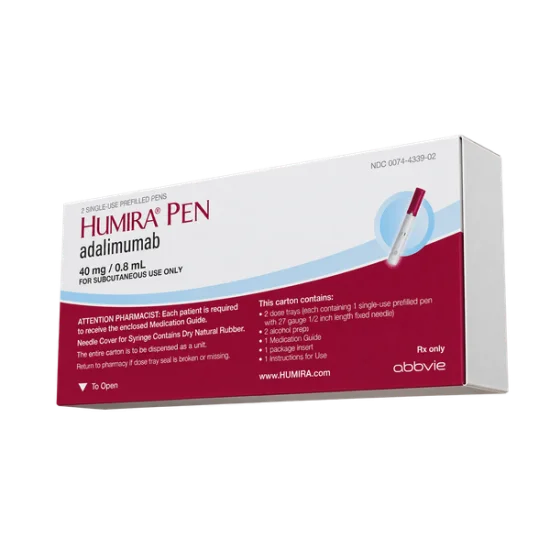
After several months of rheumatoid arthritis symptoms, I started Humira under specialist supervision. The first injection left a tender patch on my thigh for two days, but my morning stiffness gradually became easier to manage. I still needed regular blood tests and did not treat the pen as a quick painkiller.
After several months 16 Oct 2026
Humira
Inflammatory diseases such as rheumatoid arthritis, psoriasis, and Crohn’s disease can involve excessive tumour necrosis factor-alpha activity. Humira contains adalimumab, a TNF blocker for selected…
Inflammatory diseases such as rheumatoid arthritis, psoriasis, and Crohn’s disease can involve excessive tumour necrosis factor-alpha activity. Humira contains adalimumab, a TNF blocker for selected autoimmune conditions in adults and children. It is delivered by subcutaneous injection using a pre-filled pen.
Product information
Humira contains adalimumab, a recombinant monoclonal antibody that belongs to the tumour necrosis factor, or TNF, inhibitor class. The amount used for subcutaneous injection can differ between strengths and users, so there is no single amount that suits everyone.
Pharmacological classification of adalimumab
Adalimumab is classified as:
- A biologic medicine.
- A recombinant human monoclonal antibody.
- A tumour necrosis factor-alpha inhibitor.
- A targeted immunomodulator.
- A medicine administered by subcutaneous injection.
Humira is intended for injection under the skin, not into a vein or muscle. Its action develops through immune modulation rather than immediate pain relief, so improvement is assessed across days or weeks rather than after one injection.
Ingredients
Humira contains adalimumab, a recombinant monoclonal antibody that belongs to the tumour necrosis factor, or TNF, inhibitor class. The amount supplied for subcutaneous use can differ between strengths and users, so there is no single amount that suits everyone.
Therapeutic indications
Humira is prescribed for several chronic inflammatory conditions. The exact indication, dose, and treatment schedule depend on the diagnosis, age, body weight, disease severity, and other medicines being used.
Common approved or established treatment areas include:
- Rheumatoid arthritis, where inflammation affects multiple joints.
- Psoriatic arthritis, involving joints and psoriasis-related inflammation.
- Plaque psoriasis, a skin disorder with raised, scaly plaques.
- Juvenile idiopathic arthritis, an inflammatory arthritis beginning during childhood.
- Crohn’s disease, which can affect any part of the gastrointestinal tract.
- Ulcerative colitis, a chronic inflammatory disease of the large bowel.
- Uveitis, where inflammation affects structures inside the eye.
Adalimumab may reduce joint swelling, stiffness, bowel inflammation, skin plaques, or eye inflammation when the disease is driven by TNF-alpha. The expected benefit differs between conditions. A person using Humira for psoriasis may monitor skin clearance, while someone with Crohn’s disease may track abdominal pain, bowel frequency, bleeding, and weight.
| Condition | Main affected system | Treatment goal |
|---|---|---|
| Rheumatoid or psoriatic arthritis | Joints and surrounding tissues | Reduce inflammation, swelling, and stiffness |
| Plaque psoriasis | Skin | Reduce plaques, scaling, and redness |
| Crohn’s disease or ulcerative colitis | Digestive tract | Control inflammatory bowel activity and support remission |
The TGA-approved indication determines who can receive Humira for a particular condition in Australia. Treatment is generally reserved for disease that requires targeted immune therapy after assessment of severity and previous treatment response.
Directions for use
Humira is supplied as a pre-filled injector for subcutaneous administration. The active medicine is injected into fatty tissue beneath the skin. It must not be injected into a vein.
The injection site is usually the front of the thigh or the abdomen, avoiding the area immediately around the navel. The outer upper arm may be used when another person administers the injection. A painful, bruised, hardened, scarred, red, or inflamed area should not be selected.
Practical injection technique
A trained healthcare professional should demonstrate the Humira Pen technique before the first self-injection. The general sequence is:
- Allow the pen to reach room temperature naturally before use; do not heat it in hot water or a microwave.
- Wash and dry the hands.
- Choose a suitable injection site and clean the skin with an alcohol wipe if instructed.
- Remove the pen cap only when ready to inject.
- Place the pen firmly against the skin at the recommended angle.
- Activate the device according to its instructions and keep it steady during the injection.
- Wait for the injection to finish before lifting the pen away.
- Dispose of the used pen in an approved sharps container.
The pen should not be shaken.
Do not use a pen that has been dropped, damaged, frozen, or exposed to excessive heat. Biologic medicines require controlled storage, and Humira is generally refrigerated before use. The product must be protected from freezing and direct light.
A small spot of blood after the injection can occur. Press gently with clean gauze rather than rubbing the area. Persistent bleeding, extensive swelling, or rapidly worsening pain requires medical assessment.
Dose and treatment schedule
There is no single Humira amount that suits every patient. Dosing differs between strengths and users, and the appropriate schedule depends on the condition being treated, age, body weight, disease severity, and other medicines being used.
The product is used within a condition-specific regimen rather than as a universal schedule. Paediatric regimens may differ from those for adults, and treatment schedules can vary between induction and maintenance phases.
A missed dose should be administered when remembered, unless the next scheduled dose is close. Two doses should not be injected together to compensate for a missed injection. The treating clinician’s schedule takes priority because the correct interval depends on the condition being treated.

When not to use it
Humira should not be used in a person with:
- A serious active infection, including active tuberculosis.
- A known severe allergy to adalimumab or an excipient.
- Uncontrolled sepsis or another severe systemic infection.
- Moderate or severe heart failure, where TNF blockade may worsen the condition.
- A history of recurrent serious infections requiring close specialist review.
Latent tuberculosis must be assessed before starting therapy. Hepatitis B screening is also relevant because immune suppression can allow reactivation in a previously infected person.
| Combination | Main concern | Clinical approach |
|---|---|---|
| Adalimumab and anakinra | Increased susceptibility to serious infection | Avoid concurrent use |
| Adalimumab and abatacept | Additive immune suppression and infection risk | Avoid concurrent use |
| Adalimumab and other biologic immunosuppressants | Greater risk of severe infection or overlapping toxicity | Use only under specialist direction |
Live vaccines are generally avoided during treatment because the immune response may be impaired. Inactivated vaccines may remain appropriate, including seasonal vaccination where clinically indicated. Family members should discuss live vaccines with the treating team when the patient has significant immune suppression.
The FDA prescribing information warns about serious infections, tuberculosis, invasive fungal disease, malignancy, demyelinating disease, and worsening heart failure in susceptible patients [2].
When this is not for you
Humira is NOT for you if you have a serious active infection, untreated tuberculosis, or a severe allergy to adalimumab. Adalimumab can reduce part of the immune response, which makes infection screening and medication review essential before treatment.
Fever, persistent cough, night sweats, unexplained weight loss, painful urination, or a wound that is not healing should be reported promptly.
Unwanted effects
Injection-site reactions are among the most frequent problems. They can include redness, itching, warmth, swelling, bruising, or soreness around the injection area. These reactions are often mild and settle without treatment.
Other reported effects include:
- Upper respiratory infections.
- Headache.
- Nausea or abdominal discomfort.
- Rash or itching.
- Sinus symptoms.
- Fatigue.
- Mild fever after an injection.
A local reaction can be reduced by rotating injection sites and avoiding areas already irritated. A cool compress may soothe short-lived swelling. Do not apply strong pressure or repeatedly massage the injection site.
Urgent medical attention is required for:
- High fever or chills.
- Shortness of breath or chest pain.
- Severe weakness or confusion.
- Persistent cough or coughing blood.
- Facial swelling, widespread hives, or difficulty breathing.
- New numbness, weakness, vision changes, or loss of coordination.
- Severe abdominal pain or bloody diarrhoea.
- Yellowing of the skin or eyes.
Patients sometimes mistake a mild injection-site mark for an allergy. A rapidly spreading rash, swelling of the lips or throat, breathing difficulty, or collapse is different and may indicate a serious hypersensitivity reaction.
Long-term TNF blockade can increase susceptibility to serious infections and may affect specific neurological, cardiac, hepatic, or blood-related conditions. Regular clinical review helps identify problems before they become severe. The WHO describes infection risk as a key consideration when medicines alter immune function [3].
Mechanism of action
TNF-alpha is a signalling protein involved in immune-system activation. In autoimmune disease, excessive TNF-alpha activity can sustain inflammation in joints, skin, the bowel, or the eye. Adalimumab binds to TNF-alpha and prevents it from activating its usual inflammatory receptors. This reduces the release of downstream inflammatory signals. Clinicians monitor this effect through disease-specific clinical measures.
The treatment does not suppress every part of the immune system equally. Its main pharmacological effect is directed at TNF-mediated inflammation, although TNF also contributes to normal immune defence against infections. The European Medicines Agency describes adalimumab as a fully human monoclonal antibody targeting TNF-alpha [1].
Common mistakes
- Injecting into the same spot each time.
- Allowing the pen to freeze.
- Using a damaged or dropped injector.
- Shaking the pen before use.
- Injecting through clothing.
- Stopping treatment abruptly after early improvement.
- Doubling the next dose after forgetting one.
- Failing to report fever, persistent cough, or painful skin lesions.
- Receiving a live vaccine without discussing it first.
- Starting antibiotics, immune-modifying treatment, or supplements without reporting Humira use.
One easily missed detail is timing around illness. A mild cold does not automatically require a skipped dose, while fever or a serious infection may require the treatment plan to be paused. The decision depends on the infection and should be made promptly with the treating team.
Another common problem is poor device positioning. Moving the pen during injection can cause incomplete delivery or leakage onto the skin. If the full dose may not have entered, do not repeat the injection without specific advice.
Comparison
Humira, etanercept, and infliximab all target TNF-related inflammation, yet their molecular structures, administration methods, and approved uses differ.
| Medicine | Active ingredient and form | Administration pattern |
|---|---|---|
| Humira | Adalimumab; pre-filled subcutaneous pen | At intervals determined by the condition |
| Enbrel | Etanercept; subcutaneous biologic | Usually repeated subcutaneous dosing |
| Remicade | Infliximab; intravenous biologic infusion | Infusion appointments at scheduled intervals |
Humira and etanercept are injected under the skin, while infliximab is administered intravenously in a clinical setting. Infliximab can be useful when an infusion-based treatment plan suits the diagnosis, while a pre-filled pen may allow an eligible patient to administer treatment outside an infusion unit after proper training.
The choice depends on diagnosis, prior treatment, infection history, inflammatory burden, pregnancy considerations, comorbidities, and local prescribing criteria. One TNF inhibitor may control a condition well while another produces an inadequate response or unacceptable reactions. A different biologic class may be considered if TNF blockade does not provide sufficient control.
Biosimilars are biologic medicines shown to be highly similar to a reference biologic, without clinically meaningful differences in quality, safety, or biological activity. They are not simple copies in the way many small-molecule generic tablets are copied. The TGA evaluates biosimilar medicines through a scientific comparability process, while prescribing and substitution rules depend on Australian requirements.
Humira was developed by AbbVie.
Adalimumab biosimilars have also been developed by organisations including Amgen and Pfizer. ABP 501, associated with Amgen, is an adalimumab biosimilar. These products share the same active biological target but may differ in presentation, device design, excipients, and approved brand indications.
What doctors say
In clinical practice, doctors usually assess Humira by looking for sustained control of the underlying disease, not only a brief reduction in pain or redness. For rheumatoid arthritis, useful measures include swollen-joint count, morning stiffness, function, and inflammatory markers. For inflammatory bowel disease, bowel symptoms, blood tests, weight, and sometimes endoscopic findings help determine response.
A biologic is not judged after one injection. Some patients notice early symptom improvement, while others require several weeks before the change becomes clear. If the disease improves and then returns repeatedly before the next scheduled dose, the interval, adherence, antibody formation, or diagnosis may need review.
Humira can be used alone or alongside selected non-biologic treatments, depending on the condition. Methotrexate is sometimes combined with adalimumab in inflammatory arthritis, while combination therapy requires a deliberate infection and toxicity assessment.
The EMA and TGA both treat adalimumab as a medicine requiring condition-specific prescribing and ongoing clinical oversight. A stable response does not remove the need for periodic review.
What customers often ask
Can Humira affect driving, concentration, or work with machinery?
Humira does not usually produce direct sedation, so many patients can drive when they feel well. The 2024 TGA product information recognises that dizziness, fatigue, infection, or illness-related weakness can affect individual performance. A patient should avoid driving or machinery if an injection reaction, fever, visual symptom, severe headache, or underlying disease makes concentration unreliable. This advice is based on the person’s symptoms rather than a universal driving prohibition.
Which concrete condition rules out Humira?
Active tuberculosis is a clear condition that generally rules out starting Humira until it has been assessed and treated appropriately. The 2024 WHO guidance identifies TNF inhibition as a factor that can allow latent tuberculosis to become active. Serious infection, sepsis, and severe allergy to adalimumab are also major reasons to avoid treatment. Screening before therapy helps identify tuberculosis risk before immune modulation begins.
What is the correct Humira Pen technique?
Humira is injected under the skin of the abdomen or thigh, with injection sites rotated between doses. The 2024 EMA product information describes allowing the pen to reach room temperature naturally, removing the cap only before use, holding the device steadily against the skin, and disposing of it in a sharps container. The complete technique should be demonstrated by a trained clinician before self-administration. A patient should not repeat a dose if the device appears to have malfunctioned until the event has been reviewed.
How long does a Humira course last, and is long-term use acceptable?
Humira treatment may continue for months or years when the disease remains active or relapse occurs after stopping. The 2024 TGA-approved treatment information supports ongoing use in selected chronic inflammatory diseases when response and tolerability remain acceptable. A clinician may reassess the need for continuation, dose interval, infection risk, and disease activity at regular appointments. Treatment should not be stopped solely because symptoms improve unless the prescriber has provided a plan.
How soon can the effect of Humira become noticeable?
Some patients notice changes within the first few weeks, while others require a longer assessment period. Clinical trials and regulatory evaluations reviewed by the EMA in 2024 assess response over disease-specific timeframes rather than promising a fixed onset day. Joint stiffness, skin plaques, bowel symptoms, and eye inflammation may improve at different speeds. If there is no meaningful improvement after the agreed assessment period, the treatment plan may need adjustment.
Does Humira cause injection-site reactions?
Yes, redness, swelling, itching, bruising, or soreness can occur where Humira is injected. The 2024 FDA prescribing information lists injection-site reactions among reported adverse effects, and many are mild and temporary. Rotating sites and avoiding damaged skin can reduce local irritation. Widespread hives, facial swelling, breathing difficulty, or rapidly worsening symptoms require urgent medical attention because they may indicate a serious allergic reaction.
Can Humira be combined with other immune-modifying medicines or supplements?
Humira should not be combined with anakinra or abatacept because additive immune suppression can increase the risk of serious infection. The 2024 EMA product information also supports caution with other biologic immunosuppressants and live vaccines. Supplements are not automatically harmless; products that affect immunity, bleeding, or liver function should be reported before use. A planned combination may be appropriate in some treatment pathways, but it requires a documented clinical decision.
Do you offer anonymous delivery?
Your order will be securely packed and shipped within 24 hours. This is exactly what your package will look like (images of an actual item sent). It has the size and look of a regular private letter (24x11x0.7 cm) and its contents cannot be seen.
Comparison
Sources
- European Medicines Agency (2024). Humira: Summary of Product Characteristics and European public assessment information.
- U.S. Food and Drug Administration (2024). Humira (adalimumab) Prescribing Information.
- World Health Organization (2023). WHO consolidated guidelines on tuberculosis: Module 3, diagnosis and treatment of tuberculosis infection.
How Buyers Rate Humira
Based on 3 reviews
I used Humira for Crohn’s disease and noticed fewer urgent bowel movements after the early treatment period. The pen was easier after a nurse demonstrated it, although I disliked remembering the refrigeration and injection dates. A respiratory infection meant my next dose needed medical review.
After the early treatment period 27 Oct 2026Humira helped my psoriasis more than the tablets I had tried before, but the benefit was not immediate. I experienced mild redness after some injections and one flare when treatment was interrupted. The improvement was useful, though ongoing monitoring remained part of the arrangement.
14 Nov 2026