, I used isotretinoin for several months after years of deep jawline nodules. The first part was rough because my lips split and my nose bled occasionally. My skin became less oily before the acne fully settled, and the blood tests meant I had to stay organised.
Several months 27 Oct 2026
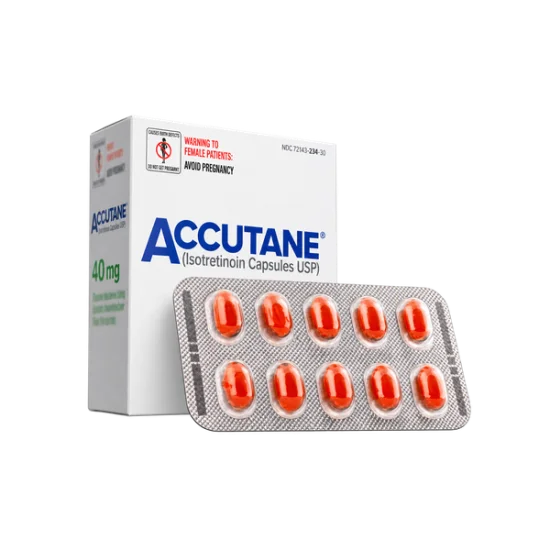
Accutane
Patients with severe, nodular, scarring or treatment-resistant acne may be prescribed Accutane after other treatments have not worked or are unsuitable. Accutane contains isotretinoin, an oral…
Patients with severe, nodular, scarring or treatment-resistant acne may be prescribed Accutane after other treatments have not worked or are unsuitable. Accutane contains isotretinoin, an oral retinoid that reduces sebaceous-gland activity and sebum production. It can improve serious acne, but requires pregnancy prevention, blood-test monitoring and careful management of dryness and mood symptoms.
Product information
Accutane contains isotretinoin, a systemic retinoid related to vitamin A. Isotretinoin is also known chemically as 13-cis-retinoic acid. Unlike topical retinoids applied to the skin, it works throughout the body after oral administration.
Ingredients
Accutane contains isotretinoin, a systemic retinoid related to vitamin A. Isotretinoin is also known chemically as 13-cis-retinoic acid. Unlike topical retinoids applied to the skin, it works throughout the body after oral administration.
The capsule is used as part of a prescription treatment course for severe acne, including nodular acne, acne that risks permanent scarring and acne that has not responded adequately to standard treatment. The amount per intake is individualised according to body weight, treatment response, tolerance and cumulative exposure.
Isotretinoin changes the behaviour of sebaceous glands and skin cells. It is not a vitamin A supplement, and vitamin A supplements must not be added casually during treatment.
Active ingredient and drug class
The active ingredient is isotretinoin. It belongs to the retinoid class, a group of medicines related to vitamin A that influence skin-cell turnover, follicular shedding and sebaceous-gland activity.
The main pharmacological effects are:
- reduced sebum production;
- reduced sebaceous-gland size and activity;
- more regular shedding of cells inside hair follicles;
- less blockage that contributes to comedones;
- lower inflammatory pressure within acne-prone follicles.
The medicine is taken as oral capsules, not applied as a cream or gel.
Accutane treatment identity
Accutane refers to oral isotretinoin treatment. Other isotretinoin products may use different names or capsule strengths, so the prescriber’s instructions must match the specific product supplied. Capsule strength, daily schedule and treatment duration should not be changed independently.
Therapeutic indications
Isotretinoin is reserved for acne that is severe, persistent, scarring or resistant to other treatment. Dermatologists may consider it when deep nodules continue to form, inflammation is extensive, scarring is developing or previous approaches have provided inadequate control.
Occasional spots and mild comedonal acne generally do not justify the risks and monitoring burden of oral isotretinoin. The decision depends on the severity of the condition, previous treatments, scarring risk, medical history and laboratory results.
Severe nodular and treatment-resistant acne
Nodules are deep, firm and painful inflammatory lesions. They sit below the skin surface and can leave long-lasting depressed or raised scars. Cysts and persistent inflammatory lesions can also affect sleep, confidence and daily social activities.
Isotretinoin addresses several acne processes at once. This helps explain why dermatologists may choose it when topical treatment or oral antibiotics have not produced adequate control. It does not guarantee permanent clearance, and some people experience recurrence after a course.
Dermatology assessment before treatment
Before treatment begins, the prescriber assesses:
- acne severity and scarring;
- previous medicines and treatment response;
- pregnancy potential and contraception arrangements;
- mental-health history and current mood;
- liver risk, lipid levels and other relevant medical factors;
- medicines, supplements and acne products already being used.
The Therapeutic Goods Administration and international prescribing information treat isotretinoin as a medicine requiring structured clinical supervision because of its reproductive toxicity and laboratory risks [1].
Directions for use
- Take isotretinoin capsules by mouth; this is an oral systemic treatment, not a topical product.
- Take the individually prescribed amount in mg per intake; no single fixed dose applies to every person.
- Take the capsules at the prescribed frequency each day; the number of capsules and daily amount may be adjusted according to response and tolerance.
- Take isotretinoin with food when instructed by the product information or prescriber, because food can affect absorption.
- Continue treatment for a typical course of about 4–6 months, with the actual duration and cumulative dose decided by the prescriber.
- Swallow capsules as directed and do not crush or open them unless specifically instructed.
- Attend required monitoring, including liver-enzyme and blood-lipid tests, and follow pregnancy-prevention requirements before, during and after treatment.
When not to use it
Tetracycline antibiotic interaction
Do not combine isotretinoin with tetracycline antibiotics such as doxycycline or minocycline unless the prescriber has deliberately managed the treatment plan. The combination can increase the risk of intracranial hypertension, meaning raised pressure around the brain.
Vitamin A and retinoid overlap
Avoid vitamin A supplements, high-dose multivitamins containing vitamin A and other retinoids unless specifically approved. Combining retinoid effects can increase toxicity, dryness and other adverse reactions.
When this is not for you
This medication is not for you if
Accutane is unsuitable or requires specialist review if you:
- are pregnant or may be pregnant;
- are planning pregnancy during the treatment or required post-treatment period;
- are breastfeeding without a specialist-approved plan;
- have a known allergy to isotretinoin or a capsule ingredient;
- are taking a tetracycline antibiotic;
- are taking vitamin A supplements or another retinoid without prescriber approval;
- have significant liver disease or uncontrolled lipid abnormalities;
- have severe or unstable psychiatric symptoms requiring urgent assessment.
Unwanted effects
Dryness is common. Cheilitis means inflamed, cracked or peeling lips, and it is one of the characteristic effects of isotretinoin. Dry skin, nasal dryness, nosebleeds, dry eyes and sun sensitivity can also occur.
Common manageable effects
Practical measures include:
- applying plain lip balm repeatedly throughout the day;
- using a gentle, non-scrubbing cleanser;
- applying a bland moisturiser to dry areas;
- using artificial tears for eye dryness;
- protecting exposed skin from strong sunlight;
- avoiding waxing, abrasive scrubs and aggressive exfoliation;
- using saline nasal moisturising products when appropriate.
Nosebleeds often begin because the inside of the nose becomes dry. Persistent or heavy bleeding needs medical review. Sun sensitivity can increase the chance of burning, so protective clothing and broad-spectrum sunscreen are sensible during outdoor exposure.
Muscle, joint and laboratory effects
Myalgia means muscle pain. Arthralgia means joint pain. These symptoms can occur during isotretinoin treatment, and strenuous exercise may make muscle discomfort more noticeable in some patients.
Report severe pain, weakness, dark urine or difficulty moving. Raised triglycerides and abnormal liver enzymes may not cause symptoms, which is why blood testing matters.
Mood changes and urgent warning signs
Mood changes, depression, anxiety, irritability and suicidal thoughts require prompt attention. A clear causal relationship has not been established for every reported psychiatric event, yet the warning must be taken seriously.
Tell a close family member or trusted person that mood changes should be reported. Seek urgent help for suicidal thoughts, severe agitation, hallucinations, loss of contact with reality or rapidly worsening depression. The FDA prescribing information includes psychiatric warnings and directs clinicians to monitor patients for these symptoms [2].
Mechanism of action
Isotretinoin reduces the size and activity of sebaceous glands. Sebum is the oily substance produced by these glands. Excess sebum can combine with shed skin cells inside a follicle, creating an environment that supports blockage and inflammation.
Isotretinoin helps normalise the way cells shed inside follicles, reducing the tendency for plugs to form. The medicine also reduces the environment that supports acne-associated bacterial activity. Its main action is the combined effect on sebaceous glands, follicular shedding and inflammation.
Common mistakes
Frequent errors include:
- changing the daily amount because acne appears worse or better;
- sharing capsules with a partner or family member;
- taking vitamin A through a multivitamin or acne supplement;
- using doxycycline or minocycline without checking the interaction;
- skipping pregnancy testing;
- donating blood during treatment or too soon afterwards;
- ignoring severe headache or visual changes;
- continuing waxing or abrasive facial treatments;
- assuming dry eyes or contact-lens discomfort is unrelated;
- missing monitoring appointments because the skin looks improved.
The safer approach is to keep the prescribed schedule, disclose every medicine and supplement, and report specific warning symptoms early. A missed period requires immediate medical contact, not waiting until the next routine review.
Comparison
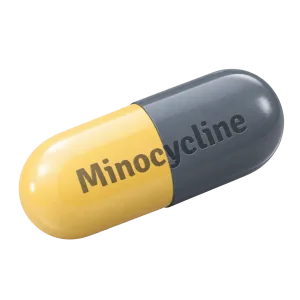
Isotretinoin, doxycycline and minocycline may all appear in acne treatment plans, but they have different roles and risks.
| Treatment | Main role and mechanism | Key limitation |
|---|---|---|
| Isotretinoin | Systemic retinoid that suppresses sebaceous glands and reduces sebum production | Pregnancy toxicity, dryness, blood-test monitoring and mood warnings |
| Doxycycline | Tetracycline antibiotic that reduces inflammatory acne activity | Duration limits, resistance concerns and interaction with isotretinoin |
| Minocycline | Tetracycline antibiotic with anti-inflammatory antibacterial activity | Interaction with isotretinoin and medicine-specific adverse effects |
Oral antibiotics can reduce inflammatory lesions but do not provide the same sebaceous-gland suppression or cumulative-course strategy. Their use is usually time-limited and may be combined with other acne measures to reduce resistance pressure.
Isotretinoin may be selected when acne is nodular, scarring or resistant to previous treatment. It is not universally preferable. The stronger pregnancy restrictions and monitoring requirements make treatment selection a specialist decision.
What doctors say
Dermatologists generally set expectations before prescribing: improvement is gradual, dryness is predictable, and the first weeks can be uncomfortable. A dose that is reduced because of side effects can still form part of a successful course.
A clinician also looks beyond the number of active spots. Scarring, new nodules, treatment history, blood-test results, mood and reproductive safety all influence the plan.
Patients often focus on acne alone and overlook headache, vision symptoms, mood change or supplement use. Those details can alter treatment safety and should be raised promptly rather than saved for a later appointment.
What customers often ask
What should I do if the expected result does not come?
Improvement may take several weeks, and early inflammatory worsening can occur before acne settles. Do not increase the amount or stop the course without the prescriber’s direction. The American Academy of Dermatology’s 2024 guidance supports specialist assessment when severe acne remains active, painful or scarring despite treatment [3]. Contact the prescriber sooner if the worsening is severe, rapidly progressive or accompanied by mood or vision symptoms.
How does Accutane differ from doxycycline or minocycline?
Accutane contains isotretinoin, a retinoid that suppresses sebaceous-gland activity and sebum production. Doxycycline and minocycline are tetracycline antibiotics used mainly for inflammatory acne, and they do not have the same sebaceous-gland effect. The TGA’s 2023 product information and dermatology guidance treat isotretinoin and tetracyclines as different treatment options with different monitoring needs. They must not be combined casually because of the risk of intracranial hypertension.
Should Accutane be taken with food or on an empty stomach?
Follow the food instruction attached to the prescribed isotretinoin product, because food can affect absorption. Many isotretinoin product instructions advise taking capsules with food and swallowing them whole. The FDA’s 2009 isotretinoin prescribing information explains that administration requirements can differ between formulations [4]. Do not open, crush or redistribute capsules unless the prescriber gives a specific instruction.
Can I drink alcohol while using Accutane?
Alcohol can add to liver stress and may worsen raised triglycerides in susceptible patients. The combination does not produce one universal safe limit for every person because risk depends on liver function, lipid results, dose and drinking pattern. Australian monitoring practice therefore treats alcohol intake as relevant medical information. Tell the prescriber honestly about alcohol use, especially if liver enzymes or triglycerides become abnormal. The Therapeutic Goods Administration’s 2023 product information treats alcohol intake as relevant to isotretinoin monitoring.
Can I combine Accutane with antibiotics or supplements?
Do not combine isotretinoin with doxycycline or minocycline without a prescribing decision because both are tetracyclines associated with intracranial hypertension when used with isotretinoin. Avoid vitamin A supplements and other retinoids unless specifically approved. Multivitamins, herbal products and sports supplements can contain ingredients that affect treatment safety. Provide the full list to the prescriber or pharmacist before adding anything. The Therapeutic Goods Administration’s 2023 product information supports reviewing supplements before isotretinoin treatment.
What should I do after a missed dose?
Take the next scheduled dose at the usual time unless the prescriber has given different instructions. Do not take two doses together to compensate. If missed doses happen repeatedly, record them and raise the pattern at the next clinical contact because inconsistent treatment can complicate assessment of response. A possible pregnancy, severe headache, visual change or major mood change takes priority over routine dose questions and requires prompt medical attention. The FDA’s 2009 prescribing information also advises following the prescribed schedule.
Do you offer anonymous delivery?
Your order will be securely packed and shipped within 24 hours. This is exactly what your package will look like (images of an actual item sent). It has the size and look of a regular private letter (24x11x0.7 cm) and its contents cannot be seen.
Comparison
Sources
- Therapeutic Goods Administration (TGA) (2023). Isotretinoin: Australian product information and pregnancy prevention requirements.
- U.S. Food and Drug Administration (FDA) (2009). Accutane (isotretinoin) prescribing information.
- American Academy of Dermatology (2024). Guidelines of care for the management of acne vulgaris.
- National Library of Medicine (2020). Isotretinoin: clinical drug information.
How Buyers Rate Accutane
Based on 5 reviews
, My dermatologist reduced the daily amount after muscle aches became noticeable during exercise. The lower schedule was easier to tolerate, although improvement took longer than I expected. I had to stop using contact lenses most days because my eyes felt gritty.
2 Nov 2026, The treatment helped with painful lesions that had been leaving marks. Dryness was manageable with regular lip balm and moisturiser, but I underestimated how sensitive my skin would become to scrubbing. Overall, I found the course burdensome, and the follow-up was more than I had expected.
5 Oct 2026, I noticed an early flare and nearly increased the dose myself. The prescriber told me to continue the planned schedule instead. My acne gradually improved, but the dryness and sun sensitivity remained noticeable through much of the course.
11 Oct 2026, I felt better about the acne after several months, though I found the monitoring appointments inconvenient. The most useful warning was about supplements because my multivitamin contained vitamin A. Stopping it avoided an unnecessary overlap.
Several months 21 Oct 2026