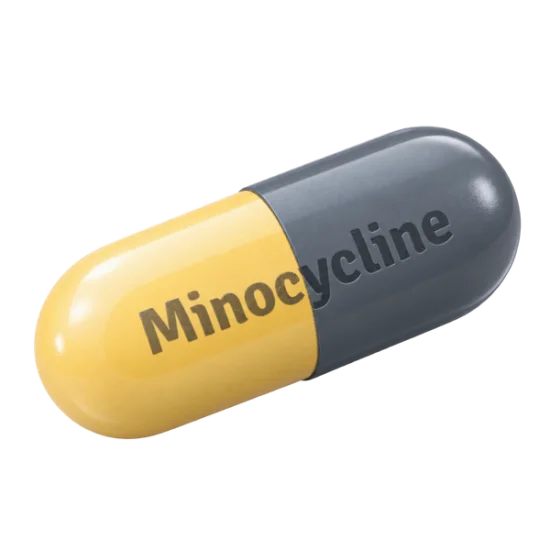
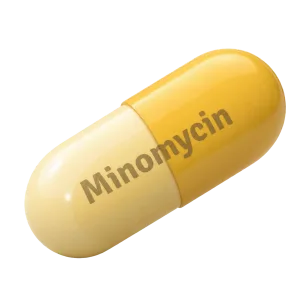
I used the capsules for inflammatory acne on my back and face. The first week brought mild dizziness, so I took them after dinner and avoided driving until I knew how they affected me. After several weeks, the painful lesions were less frequent, but the old marks remained.
After several weeks 31 Oct 2026
Minocycline
Minocycline is an oral tetracycline antibiotic prescribed for moderate-to-severe acne vulgaris and selected bacterial infections. Its active substance reduces bacterial protein production and dampens…
Minocycline is an oral tetracycline antibiotic prescribed for moderate-to-severe acne vulgaris and selected bacterial infections. Its active substance reduces bacterial protein production and dampens inflammation around acne lesions.
Product information
Minocycline belongs to the tetracycline antibiotics, a group that limits the growth of susceptible bacteria. It is a semisynthetic derivative of tetracycline and is available as minocycline hydrochloride in several oral products.
Ingredients
Minocycline contains minocycline hydrochloride, a semisynthetic tetracycline antibiotic. It limits the growth of susceptible bacteria by reducing bacterial protein production and also has anti-inflammatory activity. The product is available in oral capsule formulations.
Therapeutic indications
Minocycline belongs to the tetracycline antibiotics, a group that limits the growth of susceptible bacteria. Dermatologists commonly use oral minocycline for inflammatory moderate-to-severe acne vulgaris when topical treatment alone has not controlled papules, pustules, or deeper lesions. Its anti-inflammatory activity adds to its antibacterial action, which makes it useful when acne involves widespread redness and swelling. The Australian Therapeutic Goods Administration (TGA) recognises minocycline as a prescription antibacterial agent for appropriate clinical indications.
Minocycline capsules provide systemic treatment. They are different from topical gels, which act mainly at the skin surface and produce less exposure throughout the body.
Pharmacological class and origin
Minocycline is a semisynthetic derivative of tetracycline. It is available as minocycline hydrochloride in several oral products. The drug is absorbed after oral administration and distributes into tissues, including the skin. Its use requires antimicrobial stewardship because unnecessary or prolonged antibiotic exposure can promote resistant bacteria. Treatment duration needs review.
Acne vulgaris involves excess sebum, follicular blockage, inflammation, and bacterial activity within pilosebaceous units. Minocycline addresses the bacterial and inflammatory components, but it does not remove every factor that contributes to acne.
Directions for use
Minocycline capsules are swallowed whole with water. The exact amount and frequency depend on the purpose of use and are agreed with a doctor or pharmacist. Acne treatment commonly involves a limited course followed by review rather than indefinite antibiotic use, because prolonged exposure increases the pressure for antibiotic resistance.
Practical administration points include:
- Take the capsule at the prescribed time each day.
- Swallow it with a generous amount of water.
- Stay upright after taking it.
- Separate it from iron, calcium, magnesium, aluminium, and bismuth products according to the prescriber’s instructions.
- Do not double the next dose after a missed dose.
- If a missed dose is remembered close to the next scheduled dose, skip the missed dose rather than taking two together.
- Complete the prescribed course unless a clinician tells you to stop because of an adverse reaction.
Minocycline can cause dizziness or reduced balance in some people. The first dose is not the right time to operate machinery or drive until the individual response is clear. This matters for work involving ladders, vehicles, heights, or moving equipment.
Sun protection is sensible during treatment because tetracycline antibiotics can cause photosensitivity, although minocycline may be less photosensitising than doxycycline in some patients. Use shade, protective clothing, and broad-spectrum sunscreen when outdoors.
When not to use it
Specific situations requiring avoidance or specialist assessment include:
- Pregnancy, because tetracyclines can affect fetal development.
- Breastfeeding, where the prescriber must assess the benefit and possible infant exposure.
- Children younger than 8 years, except under specialist direction for a compelling indication.
- Significant liver disease or a history of drug-related liver injury.
- Previous intracranial hypertension associated with tetracycline treatment.
- Severe autoimmune reactions or unexplained systemic symptoms during earlier minocycline use.
- Concomitant isotretinoin treatment, because both medicines may increase the risk of raised intracranial pressure.
Minocycline can interact with oral retinoids, anticoagulants, antacids, iron supplements, calcium supplements, magnesium-containing products, and some medicines that affect the liver. The interaction may involve reduced absorption, increased toxicity, or altered anticoagulant response. A complete medicine and supplement list should be reviewed before treatment begins.
A clinician may request liver tests when treatment is prolonged, symptoms suggest liver injury, or the patient has hepatic risk factors. Routine monitoring is not identical for every person; it depends on the duration, dose, medical history, and other medicines.
When this is not for you
Minocycline is not suitable for everyone. This medication is not for you if you have a known serious allergy to minocycline or another tetracycline antibiotic, or if a clinician has identified a condition that makes tetracycline treatment unsafe.
Unwanted effects
Common oral minocycline reactions include nausea, abdominal discomfort, diarrhoea, headache, dizziness, and skin reactions. Vestibular symptoms such as spinning, imbalance, or motion sensitivity are a recognisable feature of minocycline and can appear soon after treatment begins. They may improve when treatment stops, but severe or persistent symptoms need medical review.
Skin and mucosal colour changes can develop during longer exposure. Blue-grey or brown pigmentation may affect scars, gums, nails, teeth, or areas of inflammation. This effect is uncommon but can persist after treatment, so unexplained colour change should be reported.
More serious reactions require prompt assessment:
- Severe headache with blurred or double vision, nausea, or vomiting may indicate raised intracranial pressure, also called pseudotumor cerebri.
- Yellowing of the skin, dark urine, pale stools, marked itching, or pain under the right ribs may indicate liver injury or hepatotoxicity.
- Facial swelling, wheezing, faintness, or widespread hives may indicate a serious allergic reaction.
- Fever, blistering, skin peeling, mouth ulcers, or painful eye inflammation may signal a severe cutaneous reaction.
- Persistent watery or bloody diarrhoea can occur with antibiotic-associated colitis, including Clostridioides difficile infection.
Photosensitivity is more commonly associated with some tetracyclines than others, yet intense sun exposure can still aggravate skin reactions during minocycline therapy. Cover exposed skin and avoid tanning equipment.
Topical minocycline preparations generally produce less systemic exposure than oral capsules. They can still cause local dryness, redness, itching, or irritation, and topical treatment should not be assumed to have zero systemic absorption.
A small but useful clinical detail: minocycline can cause darkening of the tongue or oral tissues in some long-term users. This is different from an acute allergic swelling, but both deserve attention if they appear suddenly.
Mechanism of action
Minocycline enters susceptible bacterial cells and binds to the 30S ribosomal subunit. Ribosomes are microscopic structures that assemble proteins. When minocycline occupies the relevant ribosomal site, transfer RNA cannot deliver amino acids normally, so bacterial protein synthesis is interrupted [1].
The process affects bacteria associated with acne, including Cutibacterium acnes, the organism previously called Propionibacterium acnes. C. acnes contributes to inflammation inside blocked follicles, although acne is not caused by bacteria alone. Reduced bacterial activity can lower the inflammatory signal around lesions.
Minocycline also has anti-inflammatory effects that are separate from simple bacterial killing. These effects may influence inflammatory mediators and enzymes involved in tissue irritation. That combination helps explain why oral tetracyclines can reduce tender, inflamed lesions even when acne severity varies from week to week.
The drug does not work like a retinoid. Adapalene changes abnormal follicular keratinisation and helps prevent new comedones, while minocycline targets bacterial protein production and inflammatory pathways. Benzoyl peroxide acts through oxidation and also helps limit antibiotic resistance when used alongside an oral antibiotic.
Common mistakes
Several everyday errors can reduce benefit or increase risk:
- Taking the capsule with an iron or calcium supplement.
- Lying down immediately after swallowing it.
- Doubling doses after forgetting one.
- Stopping after a few improved days and restarting weeks later.
- Using leftover antibiotics for a new flare.
- Ignoring dizziness before driving or operating machinery.
- Treating severe headache or vision changes as an ordinary treatment nuisance.
- Expecting oral minocycline to remove acne scarring.
- Using harsh scrubs or multiple irritating products while the skin is already inflamed.
- Continuing treatment despite jaundice, dark urine, facial swelling, or a widespread blistering rash.
A capsule can reduce inflammatory activity without changing established depressed scars. Scar management is a separate dermatological issue and may require procedures or longer-term topical treatment after active acne is controlled.
Patients also sometimes judge treatment after only a few days. Acne lesions develop over time, and early evaluation should focus on tolerability and new inflammatory lesion activity rather than instant skin clearance.
Comparison
Minocycline occupies a different pharmacological position from topical retinoids and benzoyl peroxide. Oral doxycycline is its closest alternative by antibiotic class and is often selected according to tolerability, sun sensitivity, dosing considerations, and local prescribing practice. Clindamycin phosphate is another antibacterial option, usually used topically and commonly paired with benzoyl peroxide to limit resistance.
| Treatment approach | Main mechanism | Typical role in acne care |
|---|---|---|
| Minocycline | 30S ribosomal inhibition and anti-inflammatory activity | Systemic treatment for inflammatory moderate-to-severe acne |
| Doxycycline | Tetracycline antibacterial and anti-inflammatory activity | Systemic alternative for inflammatory acne |
| Adapalene with benzoyl peroxide | Retinoid normalisation plus antibacterial oxidation | Comedonal and inflammatory acne, often for maintenance |
Adapalene is useful for preventing blocked follicles and maintaining improvement after an oral antibiotic course. Benzoyl peroxide can reduce C. acnes and helps limit resistance when used with topical or oral antibacterial treatment. Clindamycin phosphate may help inflammatory lesions, but antibiotic monotherapy is discouraged because resistance can develop.
Minocycline may be selected when a systemic tetracycline is appropriate and the prescriber considers its tolerability profile suitable. Doxycycline may be preferred when photosensitivity, cost, local guidance, or previous response influences the choice. Neither antibiotic should be treated as a permanent acne solution; topical maintenance often becomes important after inflammation settles.
What doctors say
In clinical practice, dermatologists usually judge minocycline by the number of inflamed lesions, the rate of new breakouts, tenderness, scarring risk, and treatment tolerance. A modest reduction in swelling can appear before the skin looks clear. The prescriber may continue, adjust, or stop treatment according to response and adverse effects rather than relying on a single day of skin appearance.
Doctors also consider antibiotic duration. Oral minocycline is generally used as one part of an acne plan, with topical adapalene or benzoyl peroxide often supporting maintenance. This reduces reliance on repeated antibiotic courses and addresses the follicular changes that antibiotics do not correct.
The European Medicines Agency (EMA) and WHO antimicrobial-stewardship principles support targeted antibiotic use rather than unnecessary prolonged exposure [2]. For a patient, the practical meaning is simple: do not save leftover capsules for a future flare, and do not restart an old course without a new clinical assessment.
One common prescribing mistake is focusing only on bacterial reduction. Acne can continue through hormonal, follicular, and inflammatory pathways even when bacterial activity has decreased. The treatment plan needs to match the pattern of acne, not just the presence of pustules.
What customers often ask
Can older adults use Minocycline?
Older adults can use minocycline when a prescriber considers the indication, kidney and liver function, balance risk, and other medicines. Dizziness and vestibular symptoms may have greater practical consequences in someone already at risk of falls. The FDA prescribing information for minocycline advises attention to adverse reactions and interactions, while TGA principles support individual dosing decisions [3]. Minocycline should not be started or continued in an older adult with new severe headache, visual disturbance, jaundice, or marked unsteadiness without prompt medical review.
What should happen if the expected result does not come?
If inflammatory acne does not improve after the agreed treatment period, the diagnosis, adherence, dose, antibiotic duration, and topical routine should be reassessed. Persistent comedones may need a retinoid-based approach, while scarring or nodular disease may require specialist treatment. NICE acne guidance published in 2021 supports combining appropriate topical therapy with limited systemic antibiotic use rather than extending antibiotics without review [4]. Do not increase the capsule dose independently or restart a previous course after treatment has ended.
Can Minocycline be combined with iron, calcium, or magnesium supplements?
Iron, calcium, magnesium, aluminium, and some mineral products can bind minocycline in the gut and reduce absorption. The capsule should be separated from these products according to the prescribing instructions, often by several hours. The 2024 FDA label for oral minocycline describes this absorption interaction and also identifies caution with retinoids because of intracranial hypertension risk [5]. A pharmacist or prescriber can set a daily timetable that includes supplements, antacids, and other medicines without overlapping doses.
Can people under 18 use Minocycline?
Minocycline may be prescribed to some adolescents, especially for moderate-to-severe acne, but age and developmental stage influence the decision. Tetracyclines are generally avoided in children younger than 8 years because of effects on developing teeth and bone. The prescriber also considers pregnancy potential, headache history, liver health, and interactions with acne medicines. NICE guidance from 2021 also supports age-appropriate acne treatment decisions. Capsules should not be shared between family members, even when their acne appears similar.
Which condition rules out Minocycline?
A serious previous allergic reaction to minocycline or another tetracycline rules out treatment. Pregnancy, significant liver disease, previous tetracycline-related intracranial hypertension, and concurrent isotretinoin also require avoidance or specialist review. Severe headache with visual symptoms during treatment is an urgent warning rather than a symptom to monitor casually. The appropriate alternative depends on the infection or acne pattern and the reason minocycline cannot be used. NICE guidance from 2021 supports selecting treatment according to the clinical indication.
How does Minocycline differ from Doxycycline?
Both are tetracycline antibiotics that inhibit bacterial protein synthesis and reduce inflammation. Minocycline is more strongly associated with vestibular symptoms and pigmentation changes, while doxycycline is widely recognised for photosensitivity and gastrointestinal irritation. The choice depends on the clinical indication, previous response, sun exposure, other medicines, and individual tolerability. Neither drug should be combined with isotretinoin without specialist oversight because of the risk of raised intracranial pressure. The American Academy of Dermatology guideline published in 2024 also addresses systemic acne treatment selection.
Which symptoms mean stopping Minocycline and seeking urgent care?
Seek urgent medical care for breathing difficulty, facial or throat swelling, faintness, blistering or peeling skin, severe rash, yellow skin, dark urine, or persistent bloody diarrhoea. Severe headache with blurred or double vision, vomiting, or visual field changes also needs urgent assessment because it may indicate pseudotumor cerebri. Stop further doses while obtaining urgent medical advice when a serious reaction is suspected, unless an emergency clinician gives a different instruction. Mild nausea alone is usually managed differently, but it should be reported if it becomes persistent or severe. The 2024 FDA prescribing information provides additional guidance on serious adverse reactions.
Do you offer anonymous delivery?
Your order will be securely packed and shipped within 24 hours. This is exactly what your package will look like (images of an actual item sent). It has the size and look of a regular private letter (24x11x0.7 cm) and its contents cannot be seen.
Comparison
Sources
- U.S. Food and Drug Administration (2024). MINOCIN (minocycline hydrochloride) Capsules Prescribing Information.
- World Health Organization (2017). WHO Guidelines on Use of Medically Important Antimicrobials in Food-Producing Animals.
- Therapeutic Goods Administration (2023). Australian Product Information: Minocycline.
- National Institute for Health and Care Excellence (2021). Acne vulgaris: management.
- European Medicines Agency (2019). Summary of Product Characteristics (SmPC) — minocycline.
How Buyers Rate Minocycline
Based on 3 reviews
My dermatologist prescribed minocycline for a skin infection rather than acne. I felt nauseated when I swallowed it with very little water. Taking it with a full glass and staying upright solved that problem, although I stopped after developing persistent balance problems and contacted the clinic.
17 Oct 2026The capsules reduced the redness, but the improvement was uneven. I had been taking an iron supplement at the same time, and separating them made the treatment more consistent. I still needed a topical routine for blocked pores.
13 Nov 2026