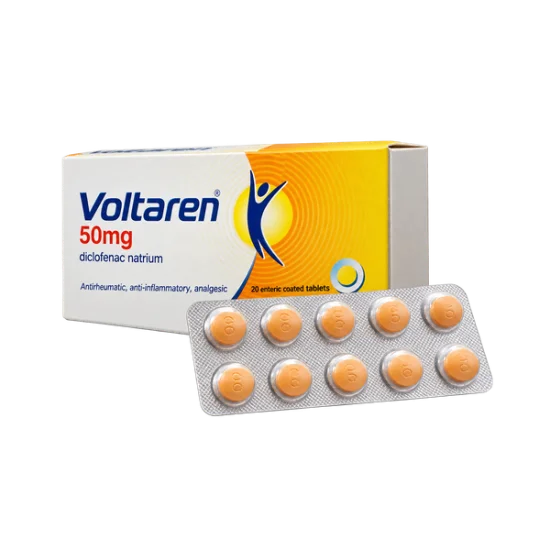
I took the 50 mg tablets for a painful knee flare. The first day helped with walking, but I noticed indigestion by the third dose, so I stopped and arranged a review rather than continuing automatically.
By the third dose 2 Nov 2026
Voltaren
Voltaren contains diclofenac sodium, an NSAID for suitable inflammatory and musculoskeletal pain. It reduces prostaglandin production, helping ease swelling, tenderness, and movement-related pain.
Product information
It contains diclofenac sodium, an NSAID used for arthritis, musculoskeletal pain, and inflammatory conditions. Diclofenac reduces prostaglandin production, easing swelling, tenderness, and movement-related pain when the medicine is suitable for the patient.[1]
Ingredients
Voltaren tablets contain diclofenac sodium. The dose is decided individually, taking age, other medicines, and health conditions into account. Diclofenac belongs to the non-steroidal anti-inflammatory drug class, or NSAIDs. The medicine provides analgesic, anti-inflammatory, and antirheumatic effects.
Diclofenac sodium differs chemically from diclofenac diethylamine, a form used in some topical products. The salt affects how diclofenac is formulated and delivered; it does not change the need for careful attention to NSAID precautions.
Voltaren may be prescribed for:
- Osteoarthritis pain and stiffness
- Rheumatoid arthritis and other inflammatory joint conditions
- Acute musculoskeletal pain
- Back pain and soft-tissue inflammation
- Pain after injury or surgery
- Menstrual pain
- Acute gout attacks, when clinically appropriate
Relief varies with the cause, severity, and duration of pain. Voltaren reduces symptoms; it does not reverse cartilage loss or cure the underlying cause of osteoarthritis.
Therapeutic indications
Voltaren is used for pain with an inflammatory or musculoskeletal component. It may reduce pain, stiffness, swelling, and tenderness associated with osteoarthritis, rheumatoid arthritis, back pain, sprains, strains, and other conditions selected by a prescriber.
Osteoarthritis is a degenerative joint disorder involving cartilage, bone, and surrounding tissues. Symptoms often include pain during activity, brief stiffness after rest, and tenderness around the joint. Diclofenac can improve symptoms without changing the structural progression of osteoarthritis.
Osteoarthritis Pain in Knees and Hands
Knee osteoarthritis often causes pain during walking, stair climbing, or standing from a chair. Hand osteoarthritis may cause tenderness, reduced grip strength, and discomfort during opening, lifting, or twisting movements.
A tablet can be useful when more than one joint is affected. It also exposes the whole body to NSAID effects, so a localised pain problem does not automatically make oral diclofenac the best option.
Joint Pain Requiring Assessment
Urgent medical assessment is needed for:
- A hot, markedly swollen joint
- Fever with joint pain
- Sudden severe pain after a major injury
- Inability to bear weight or use the limb
- Rapidly increasing redness or swelling
- New pain with unexplained bruising or bleeding
- Severe pain with chest discomfort, breathlessness, or faintness
These symptoms can occur with infection, fracture, gout, bleeding, or cardiovascular disease. Voltaren should not be used to mask unexplained symptoms indefinitely.
Directions for use
The dose is decided individually, taking age, other medicines, and health conditions into account. The tablet should be swallowed with water rather than crushed or chewed.
Use the prescribed dose and schedule. Do not take extra tablets because pain has not eased quickly.
- Take each dose at the instructed interval.
- Use the lowest dose that controls symptoms.
- Keep treatment duration as short as clinically appropriate.
- Avoid combining Voltaren with another NSAID unless a doctor or pharmacist has specifically advised it.
- If a dose is missed, take it when remembered unless the next scheduled dose is near; do not double the next dose.
- Stop self-treatment and seek medical advice if pain persists, worsens, or changes character.
Food may reduce stomach discomfort, but it does not remove the risk of ulceration or bleeding. Alcohol can add to stomach irritation and may make dizziness or drowsiness more troublesome.
When not to use it
Voltaren is not suitable for everyone.
- You have had asthma, wheezing, facial swelling, or hives after aspirin, ibuprofen, naproxen, or another NSAID.
- You currently have, or have recently had, a stomach or intestinal ulcer or bleeding.
- You have active gastrointestinal bleeding.
- You have severe kidney, liver, or heart failure.
- You have established cardiovascular disease where systemic NSAID risk is unacceptable.
- You are recovering from coronary artery bypass surgery.
- You have a serious reaction to diclofenac.
- You are in the third trimester of pregnancy.
- You are taking another diclofenac product or regular NSAID without medical direction.
Diclofenac can interact with warfarin and other anticoagulants, aspirin, corticosteroids, selective serotonin reuptake inhibitors, diuretics, ACE inhibitors, angiotensin-receptor blockers, lithium, methotrexate, ciclosporin, tacrolimus, and some diabetes medicines.
Blood pressure treatment may work less well, and kidney function can deteriorate when an NSAID is combined with a diuretic and an ACE inhibitor or angiotensin-receptor blocker, especially during dehydration. TGA consumer information highlights the need to disclose all medicines and relevant medical conditions before systemic diclofenac is used.[3]
When this is not for you
This medicine may not be suitable if aspirin, ibuprofen, naproxen, or another NSAID has caused you asthma, wheezing, swelling, or hives. People with ulcers or bleeding, serious kidney, liver, heart, or cardiovascular problems, those recovering from bypass surgery, and people in the third trimester of pregnancy should not use it without appropriate medical direction. Tell a doctor or pharmacist about all medicines, especially blood thinners, aspirin, steroids, antidepressants, diuretics, and blood-pressure medicines.
Unwanted effects
Oral diclofenac can cause more systemic exposure than topical diclofenac. It may also produce more body-wide adverse effects because the active ingredient circulates throughout the body.
Common effects include:
- Indigestion or upper-abdominal discomfort
- Nausea
- Diarrhoea or constipation
- Headache
- Dizziness
- Fluid retention
- Increased blood pressure
- Skin rash
More serious reactions include stomach ulceration, gastrointestinal bleeding, kidney injury, liver injury, severe allergic reaction, asthma worsening, heart attack, stroke, and serious skin reactions. The European Medicines Agency has recognised cardiovascular and gastrointestinal risks across systemic NSAIDs, with risk influenced by dose, duration, and individual medical history.[2]
Local and Allergic Reactions
Although tablets do not cause application-site reactions, diclofenac can still trigger rash, itching, facial swelling, wheezing, or breathing difficulty. Stop the medicine and obtain urgent medical help if breathing becomes difficult, the face or throat swells, or a blistering rash develops.
Black stools, vomiting blood, fainting, severe stomach pain, chest pain, sudden weakness, or markedly reduced urine output require urgent assessment.
Systemic NSAID Precautions
Older adults, people with previous ulcers, and those with kidney, liver, heart, or vascular disease have a higher risk of complications. Risk also rises with dehydration, high blood pressure, smoking, corticosteroids, anticoagulants, antiplatelet medicines, and some antidepressants.
Mechanism of action
Diclofenac blocks cyclo-oxygenase enzymes, called COX-1 and COX-2. These enzymes help the body produce prostaglandins, chemical messengers involved in pain, heat, swelling, and fever.
Lower prostaglandin production reduces the sensitivity of pain nerves and limits inflammatory signalling. Diclofenac does not numb the area like a local anaesthetic. It reduces the inflammatory chemistry that makes movement painful.
COX-2 and Prostaglandin Signalling
COX-2 becomes more active during inflammation. It contributes to production of prostaglandin E2, which can increase pain sensitivity, swelling, and local warmth.
Diclofenac inhibits this pathway, but it also affects COX-1. COX-1 supports protective functions in the stomach and helps platelets participate in clotting. This explains why diclofenac can relieve pain while also increasing the risk of stomach irritation, ulceration, bleeding, and other NSAID-related complications.
Laboratory and tissue studies have examined effects on inflammatory mediators such as TNF-alpha, interleukin-6, and interleukin-8. These findings help explain diclofenac pharmacology, but they should not be presented as proof that one formulation produces superior outcomes for every patient.
Systemic Delivery and Joint Tissues
An oral tablet reaches the circulation and is distributed beyond the painful joint. This can help when pain affects several areas or when the painful tissue is deep.
Systemic delivery also exposes organs throughout the body to diclofenac. The risk is greater than with many topical preparations because more of the active ingredient is available beyond the application site. TGA safety information therefore emphasises the lowest suitable dose for the shortest clinically appropriate period.
Common mistakes
- Taking Voltaren with ibuprofen or naproxen without checking the combined NSAID exposure
- Adding aspirin for pain when it is not medically required
- Repeating a dose too soon after a missed tablet
- Continuing treatment for weeks without reviewing ongoing pain
- Assuming a tablet is risk-free because it is sold for pain relief
- Using Voltaren to suppress pain after a major injury without assessment
- Ignoring new black stools, vomiting blood, facial swelling, or breathing problems
- Forgetting to mention anticoagulants, steroids, antidepressants, or blood-pressure medicines
- Drinking heavily while experiencing stomach irritation or dizziness
One detail patients often miss is that diclofenac can worsen fluid retention and blood pressure, even when the first doses cause no stomach symptoms. Another is that kidney risk increases during vomiting, diarrhoea, fever, or poor fluid intake.
Comparison
Choice depends on the pain site, expected duration, medical history, and interaction profile.
| Option | Main role and route | Main limitation |
|---|---|---|
| Voltaren tablets | Oral diclofenac NSAID for inflammatory and musculoskeletal pain | Stomach, kidney, cardiovascular, liver, and bleeding risks |
| Ibuprofen or naproxen | Oral NSAIDs for pain, fever, and inflammation | Combining with diclofenac can increase NSAID toxicity |
| Paracetamol | Non-NSAID analgesic for selected mild-to-moderate pain | Does not provide the same anti-inflammatory effect; excess harms the liver |
Advil is a brand associated with ibuprofen in some markets. Ibuprofen and naproxen are not automatically safer than diclofenac, and taking one alongside Voltaren may increase adverse effects.
Paracetamol is also called acetaminophen. It does not carry the same ulcer and platelet effects as NSAIDs, but excessive total intake can cause severe liver injury, especially with heavy alcohol use or pre-existing liver disease.
Prescription anti-inflammatory options include celecoxib, meloxicam, indomethacin, piroxicam, etoricoxib, and nimesulide. Tramadol is an opioid analgesic rather than an NSAID. These medicines are not interchangeable with Voltaren.
Rofecoxib was withdrawn from many markets because of cardiovascular safety concerns and should not be treated as a current self-care alternative. Eltenac is a related diclofenac analogue with limited clinical relevance in routine Australian self-care; it should not be substituted for diclofenac without local clinical guidance.
What doctors say
In clinical practice, oral diclofenac is selected when an anti-inflammatory effect is needed and the patient’s risk profile permits systemic NSAID treatment. The decision is not based on pain intensity alone.
A doctor will weigh the expected benefit against age, kidney function, blood pressure, cardiovascular disease, ulcer history, pregnancy status, and interacting medicines. The medicine may be useful for a defined episode, yet unsuitable as an open-ended daily treatment.
Guideline support for topical diclofenac is strongest for localised knee osteoarthritis, while oral diclofenac may be considered for broader inflammatory or musculoskeletal symptoms after risk screening. The American College of Rheumatology also places exercise, physical activity, and non-drug measures within osteoarthritis care rather than treating analgesia as the whole plan.
A practical prescribing point is reassessment. If the pain pattern changes, the joint becomes hot and swollen, or the patient needs repeated courses, the diagnosis and treatment strategy need review.
What customers often ask
How does Voltaren differ from ibuprofen or naproxen?
Voltaren contains diclofenac sodium, while ibuprofen and naproxen contain different NSAID substances. All reduce prostaglandin production, but their duration, dosing schedules, interactions, and cardiovascular or gastrointestinal profiles differ. Guidance from the TGA in 2024 supports individual risk assessment rather than treating one NSAID as suitable for every patient.
Which symptoms mean I should stop Voltaren and seek urgent medical help?
Stop and seek urgent help for vomiting blood, black stools, severe abdominal pain, chest pain, sudden weakness, breathing difficulty, facial swelling, or a blistering rash. These symptoms may indicate bleeding, cardiovascular complications, severe allergy, or a serious skin reaction. The WHO’s 2017 Medication Without Harm initiative supports prompt clinical assessment of suspected severe adverse reactions.[4]
How soon should Voltaren begin to relieve pain?
Some people notice reduced pain within several hours, while inflammatory joint symptoms may require repeated doses over a short treatment period before the benefit is clear. The response depends on the condition, severity, dose timing, and individual absorption. EMA’s 2013 product information for systemic diclofenac describes treatment response as individual and supports using the lowest suitable dose for the shortest appropriate duration.
What should I discuss with a doctor before starting Voltaren?
Discuss previous ulcers or gastrointestinal bleeding, kidney or liver disease, heart disease, high blood pressure, asthma after aspirin or NSAIDs, pregnancy, breastfeeding, and every medicine or supplement being taken. Warfarin, aspirin, steroids, some antidepressants, diuretics, and several blood-pressure medicines can alter the risk profile. Australian TGA guidance in 2024 supports checking these factors before systemic diclofenac is used.
Can Voltaren be used during pregnancy or breastfeeding?
Diclofenac should not be used in the third trimester because NSAIDs can affect the fetus, labour, and the newborn circulation. Earlier pregnancy requires an individual decision based on benefit and risk, while breastfeeding also needs discussion because small amounts of diclofenac may pass into breast milk. EMA’s 2013 product information advises avoiding systemic NSAIDs late in pregnancy and using them only when clinically justified earlier.
Is long-term Voltaren treatment acceptable?
Long-term treatment requires regular review because gastrointestinal, kidney, liver, blood-pressure, and cardiovascular risks can increase with duration and cumulative exposure. A recurring need for diclofenac may indicate that the underlying condition needs reassessment or a different management plan. The WHO’s 2017 Medication Without Harm initiative supports periodic review of ongoing analgesic treatment rather than indefinite self-directed use.
Do you offer anonymous delivery?
Your order will be securely packed and shipped within 24 hours. This is exactly what your package will look like (images of an actual item sent). It has the size and look of a regular private letter (24x11x0.7 cm) and its contents cannot be seen.
Comparison
Sources
- European Medicines Agency (2013). Summary of Product Characteristics (SmPC) — diclofenac.
- European Medicines Agency (2013). Referral assessment report — diclofenac-containing medicines.
- Therapeutic Goods Administration (2024). Consumer Medicine Information (CMI) — Voltaren tablets.
- World Health Organization (2017). Medication Without Harm: Global Patient Safety Challenge.
How Buyers Rate Voltaren
Based on 3 reviews
Voltaren helped my lower-back pain enough to sleep for several nights. I had been taking ibuprofen as well, which I had not realised could increase the NSAID load. The pharmacist told me to avoid combining them without a clear plan.
Several nights 5 Oct 2026I used the tablets after a sports injury and felt some improvement within a day. The pain returned when I stopped, so the injury was assessed instead of repeating tablets indefinitely.
Within a day 25 Oct 2026