He took sertraline for depression and noticed nausea during the first week. Sleep became steadier by the fourth week, although he still needed a dose review because motivation remained low.
By the fourth week 5 Oct 2026
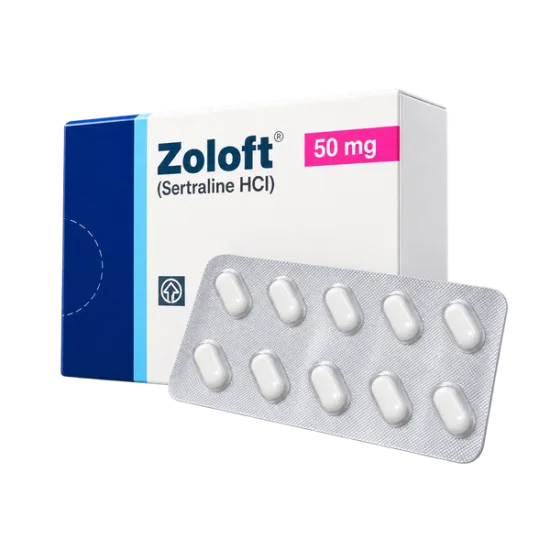
Zoloft
Zoloft contains sertraline, which increases the availability of serotonin between nerve cells in the brain. It is prescribed for adults with depression and several anxiety-related conditions…
Zoloft contains sertraline, which increases the availability of serotonin between nerve cells in the brain. It is prescribed for adults with depression and several anxiety-related conditions, including obsessive-compulsive disorder, panic disorder and post-traumatic stress disorder. As an SSRI, it can improve mood and reduce persistent fear, intrusive thoughts and anxiety when selected and monitored by a clinician.
Product information
Zoloft contains sertraline hydrochloride, a selective serotonin reuptake inhibitor (SSRI). Sertraline is used in psychiatric treatment because it changes serotonin signalling rather than producing immediate sedation or stimulation.
Ingredients
The product is supplied as tablets. The amount of Zoloft to use and how often to take it depend on the purpose of treatment and are agreed with a doctor or pharmacist.
Therapeutic indications
Zoloft is prescribed when symptoms fit a condition for which sertraline has an established clinical role. The choice depends on diagnosis, previous treatment, other medicines, age, medical history and the person’s response.
Common clinical indications include:
- Major depressive disorder (MDD)
- Obsessive-compulsive disorder
- Panic disorder
- Post-traumatic stress disorder (PTSD)
- Social anxiety disorder
- Premenstrual dysphoric disorder
- Anxiety symptoms occurring with depressive illness
Sertraline is not intended to provide a quick change in mood after one tablet. Treatment plans usually include regular follow-up so the clinician can assess sleep, anxiety, mood, suicidal thoughts, adverse effects and daily functioning.
| Clinical category | How sertraline may help | Important limitation |
|---|---|---|
| Depression | Supports serotonin signalling and may reduce low mood, loss of interest and associated anxiety | Improvement can take several weeks |
| Anxiety, panic and social anxiety | May reduce excessive fear, panic symptoms and avoidance | Anxiety can feel temporarily stronger at the beginning |
| OCD and PTSD | May reduce intrusive thoughts, compulsions, re-experiencing and hyperarousal | Psychological therapy may still be required |
The European Medicines Agency describes sertraline within the SSRI group and evaluates its use through product information covering indications, dosing, warnings and adverse reactions [2].
Directions for use
The amount of Zoloft required and how often it is taken depend on the purpose of use and are agreed with a doctor or pharmacist. The prescribed regimen may be adjusted gradually according to response and tolerability.
- Swallow the tablet with water.
- Take it at the same time each day.
- Use it with food or without food, but keep the routine consistent.
- Do not change the amount or frequency without medical direction.
- Do not take two doses together after a missed dose unless a clinician has specifically instructed this.
- If a missed dose is remembered close to the next scheduled dose, the usual approach is to skip the missed dose and resume the regular schedule.
Do not crush or split a tablet unless the prescriber or pharmacist has confirmed that this is suitable for the specific product. Changing a tablet can make accurate dosing more difficult.
A common mistake is judging treatment after only a few days. Sertraline is not designed to work like a sedative, and early side effects can appear before the intended mood benefit. Sudden dose changes can also produce avoidable symptoms.
When not to use it
Zoloft is not suitable for everyone. It should not be used with certain medicines or in specific clinical circumstances.
- Concurrent use with a monoamine oxidase inhibitor, or recent discontinuation without an appropriate medical washout period.
- Serious allergic reaction to sertraline or an excipient in the tablet.
- Concomitant use of pimozide, unless a specialist has provided a specific treatment plan.
- Current or previous bipolar disorder that has not been assessed in the context of antidepressant treatment.
- Untreated severe liver disease requiring a different dosing strategy.
- A history of seizures that has not been reviewed by the prescriber.
- Pregnancy, planned pregnancy or breastfeeding when the benefits and risks have not been assessed.
Sertraline can also increase bleeding risk when taken with aspirin, non-steroidal anti-inflammatory drugs or anticoagulants. People with epilepsy, liver disease, low sodium, a bleeding disorder or a history of glaucoma require specific assessment.
The WHO’s pharmacovigilance materials describe serotonin toxicity as a clinical syndrome involving mental, autonomic and neuromuscular changes that requires prompt recognition [4].
When this is not for you
This medication is not for you if:
- You are taking a monoamine oxidase inhibitor, or have recently stopped one without an appropriate medical washout period.
- You have had a serious allergic reaction to sertraline or an excipient in the tablet.
- You are taking pimozide, unless a specialist has provided a specific treatment plan.
- You have a current or previous bipolar disorder diagnosis that has not been assessed in the context of antidepressant treatment.
- You have untreated severe liver disease requiring a different dosing strategy.
- You have a history of seizures that has not been reviewed by the prescriber.
- You are pregnant, planning pregnancy or breastfeeding and the benefits and risks have not been assessed.
Tell the prescriber about every medicine and supplement being used. This includes anticoagulants, aspirin, anti-inflammatory pain medicines, migraine medicines, opioid pain medicines, sedatives, other antidepressants and herbal products.
Unwanted effects
Common adverse effects include nausea, diarrhoea, headache, dizziness, reduced appetite and sleep disturbance. Some people experience dry mouth, sweating, tremor, tiredness or changes in sexual function. Men may experience reduced libido, delayed ejaculation or erectile dysfunction; women may also experience reduced desire or difficulty reaching orgasm.
Many early effects improve during the first few weeks as the body adjusts. Sexual side effects can persist for longer and deserve direct discussion rather than being silently tolerated. A person may also feel more restless or anxious at the beginning, even when sertraline later reduces anxiety.
Clinical trial and prescribing information describe gastrointestinal symptoms, headache, dizziness and sexual dysfunction among recognised adverse reactions to sertraline [3].
Seek urgent medical attention for:
- Severe agitation, confusion, high fever, sweating, muscle rigidity or fast heartbeat
- A seizure
- Fainting, severe allergic swelling or difficulty breathing
- Unusual bleeding, especially with black stools, vomiting blood or extensive bruising
- Severe eye pain with blurred vision or coloured rings around lights
- New suicidal thoughts, dangerous impulsivity or a sudden dramatic change in behaviour
One practical point is easy to miss: dizziness may be more noticeable when standing quickly during the first days of treatment. Rise slowly, especially after illness, poor fluid intake or a night of disrupted sleep.

Mechanism of action
Serotonin is a neurotransmitter involved in mood, anxiety, sleep, appetite and emotional processing. After serotonin is released between nerve cells, a transporter normally removes some of it. Sertraline inhibits this transporter, allowing serotonin signals to remain active for longer.
Sertraline does not create an artificial feeling of happiness, and it does not work as an immediate calming tablet.
The Australian Therapeutic Goods Administration (TGA) recognises sertraline as an SSRI used in the management of depressive and anxiety-related disorders [1].
Common mistakes
Several patterns can reduce benefit or increase avoidable problems:
- Stopping after a few days because improvement has not appeared.
- Taking extra tablets after a difficult day.
- Skipping doses repeatedly and then restarting at a previous amount.
- Combining sertraline with St John’s wort or another antidepressant.
- Using recreational substances while assuming all serotonin-related risks are theoretical.
- Failing to mention aspirin, anti-inflammatory pain relief or anticoagulants.
- Ignoring new suicidal thoughts, severe restlessness or symptoms of mania.
- Taking the tablet at widely different times each day.
- Assuming sexual side effects will disappear without discussing them.
- Sharing tablets with another person who has similar symptoms.
Comparison
Sertraline belongs to the SSRI group. Other treatment approaches act on different neurotransmitter systems or combine medication with structured psychological therapy.
| Treatment approach | Main pharmacological focus | Typical clinical trade-off |
|---|---|---|
| Sertraline and other SSRIs | Increase serotonin signalling by reducing serotonin reuptake | Useful across several conditions, but nausea and sexual side effects can occur |
| SNRIs | Increase serotonin and noradrenaline signalling | May help some pain or low-energy symptoms, but can affect blood pressure and cause activation |
| Psychological therapy | Changes patterns of thought, behaviour and emotional response without drug exposure | Requires regular participation and may take time to build skills |
The choice between an SSRI, an SNRI and psychological therapy is not based on one symptom alone. A clinician may consider previous antidepressant response, panic symptoms, obsessive thoughts, sleep, pain, blood pressure, bipolar symptoms and other medicines.
Sertraline may suit a person who needs a treatment option with evidence across depression and several anxiety-related disorders. It may be less suitable when a person has a relevant interaction, a history of severe activation with antidepressants, or a condition listed under the contraindications below.
What doctors say
In clinical practice, doctors usually assess three separate outcomes: whether symptoms are improving, whether daily function is returning and whether adverse effects are acceptable. A lower anxiety score alone may not show the full result if sleep, work performance or social avoidance remain unchanged.
Clinicians also look for activation. New racing thoughts, reduced need for sleep, impulsive decisions or unusual confidence can indicate hypomania rather than recovery. That distinction matters because increasing an antidepressant in that situation may worsen the problem.
Another practical observation is that adherence often falls when nausea or sexual dysfunction is not discussed openly. Patients may stop taking tablets without telling anyone, leaving the clinician to assume the treatment simply failed. A short record of dose timing, sleep, mood, bowel symptoms and sexual effects can make the next appointment more productive. Follow-up should also review changes in daily functioning and adherence. This information helps the clinician distinguish treatment response from adverse effects.
What customers often ask
What happens when Zoloft is stopped, and should it be tapered?
Stopping suddenly can cause dizziness, nausea, sensory disturbances, irritability, anxiety and sleep changes. NICE guidance from 2025 supports a gradual reduction for antidepressants when discontinuation symptoms or relapse risk are concerns. A taper should be agreed with the prescribing clinician, with the pace adjusted to symptoms and treatment duration.
How should Zoloft be stored at home and while travelling?
Keep tablets in a dry place at ordinary room temperature, away from excess heat and moisture, and store them where children cannot access them. During travel, keep the medicine with personal medicines rather than in a hot vehicle or checked luggage. The EMA product information from 2025 supports protecting sertraline tablets from unsuitable storage conditions and retaining the dispensing information for continuity of treatment.
What should happen if the expected result does not come?
Book a medication review rather than increasing the amount independently. The clinician may assess adherence, treatment duration, diagnosis, alcohol or drug use, bipolar symptoms, interactions and whether psychological therapy should be added. WHO mental-health guidance from 2025 supports reviewing the whole treatment plan when symptoms remain significant instead of treating one medicine as the only available intervention.
Can people under 18 use Zoloft?
Sertraline may be prescribed to some younger patients for specific conditions, but age, diagnosis, consent and monitoring requirements matter. The FDA antidepressant warning from 2024 highlights increased vigilance for suicidal thoughts and behavioural changes in children, adolescents and young adults. A paediatric prescription requires planned follow-up with the treating clinician and a clear safety plan.
Which condition rules out Zoloft?
Concurrent treatment with a monoamine oxidase inhibitor rules out routine use because of the risk of serious serotonergic toxicity. A history of severe allergy to sertraline, current pimozide use or an unassessed bipolar disorder also requires a different treatment decision. The TGA and FDA product information from 2024 identify these restrictions as clinically significant rather than minor precautions.
Do you offer anonymous delivery?
Your order will be securely packed and shipped within 24 hours. This is exactly what your package will look like (images of an actual item sent). It has the size and look of a regular private letter (24x11x0.7 cm) and its contents cannot be seen.
Comparison
Sources
- Therapeutic Goods Administration (2024). Sertraline product information.
- European Medicines Agency (2024). Sertraline: medicine overview and product information.
- U.S. Food and Drug Administration (2023). Zoloft (sertraline hydrochloride) prescribing information.
- World Health Organization (2019). WHO Pharmacovigilance Toolkit.
How Buyers Rate Zoloft
Based on 5 reviews
She reported less panic after several weeks and found the tablets easy to fit into her morning routine. Dry mouth was irritating at first, and she kept water nearby during work.
After several weeks 13 Oct 2026She experienced improvement in intrusive thoughts but disliked increased sweating and reduced sexual interest. Her clinician adjusted the treatment plan rather than telling her to simply tolerate the effects.
16 Oct 2026She stopped abruptly after feeling better and developed dizziness, vivid dreams and irritability. The symptoms settled after a clinician arranged a gradual restart and reduction plan.
27 Oct 2026She felt more anxious during the first fortnight and nearly abandoned treatment. Later, her mood improved, but she still required follow-up for sleep disruption and persistent gastrointestinal discomfort.
The first fortnight 1 Nov 2026